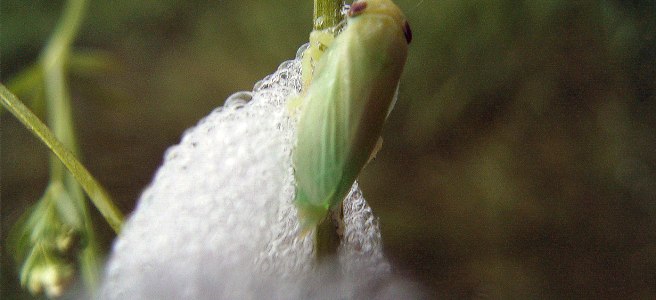
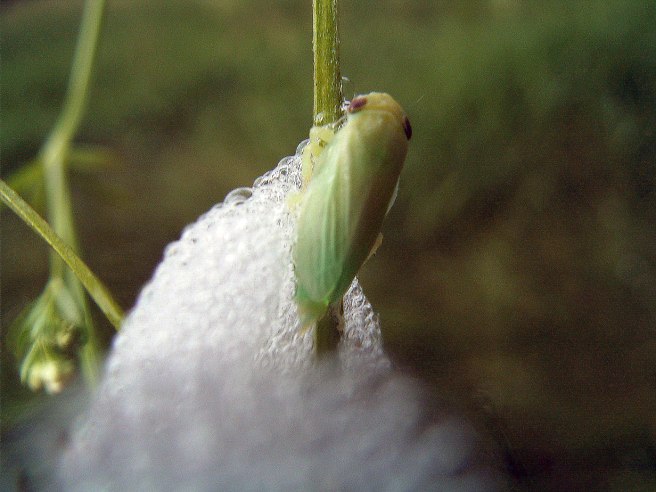
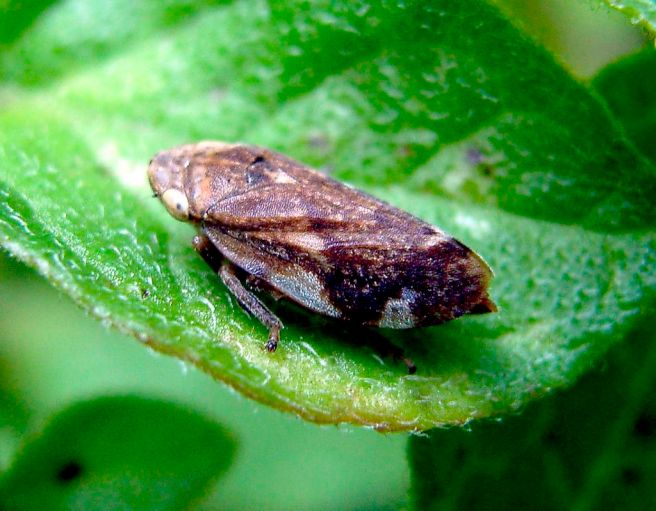
A froghopper larva (Philaenus spumarius) on a stalk above its foam nest. Photograph by Elke Freese, CC0 licensed.
Citizen science
The University of Sussex, the Royal Horticultural Society and Forest Research have recently launched a campaign encouraging the public to record sightings of cuckoo-spit (the distinctive frothy foam created by various species of froghoppers) through iRecord. This project aims to gain a better understanding of these native sap-sucking insects by mapping their distribution and learning a bit more about their host plants, in order to predict how they might potentially spread diseases between plants. This sounds like an excellent way to engage people with the natural world and get them paying attention to the plants and insects around them while obtaining meaningful data on an easily recognisable phenomenon on a far wider scale than a single research team could manage. Unfortunately, the way it is being reported seems to be backfiring horribly.
When science communication goes wrong
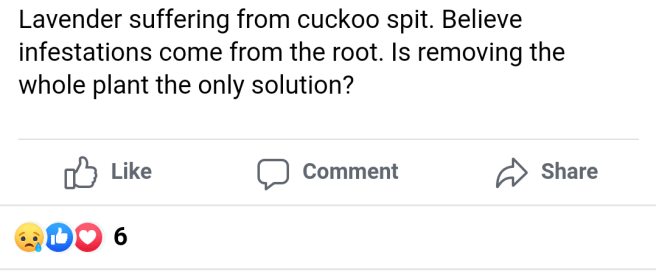
In recent weeks I have seen a number of posts in gardening and wildlife groups like the one above, from people who seem to have only noticed the foam in following these reports and are concerned that it is the froghoppers themselves that are a danger to plants. Unfortunately journalists, readers and viewers seem to have ignored the part about the froghopper and only paid attention to the disease it would be capable of transmitting if it were introduced to the UK. Xylella fastidiosa, frequently shortened to just the genus Xylella in the media, is not the latest Youtube beauty blogger but a bacterium that infects the transport vessels of an extremely wide variety of plants, blocking them and causing them to wilt and dies. Sap-sucking insects like spittlebugs can pick the bacterium up from the vessels they pierce to feed from, then inject it into the next plant they visit.
I suspect that the problem is that if it bleeds it leads, or to update the old adage, if it scares it shares. A terrifying, rapacious disease coming for YOUR herbaceous perennials will get a lot more clicks than a worthy citizen science study. Even in the original press release, from which a number of news outlets picked up the story, mentions that Xylella results in the disease and death of many popular garden plants in the first paragraph but only mentions that it hasn’t yet been found in the UK in paragraph nine. Many of the news articles that did then pick it up are even more alarmist, illustrated with terrifying pictures of blighted wastelands of wilted vegetation. So the message that seems to have been widely received is that a dangerous disease of plants is somehow connected to the appearance of this frothy white foam, and so it or the plants it appears on should be destroyed.
Foam-party animal
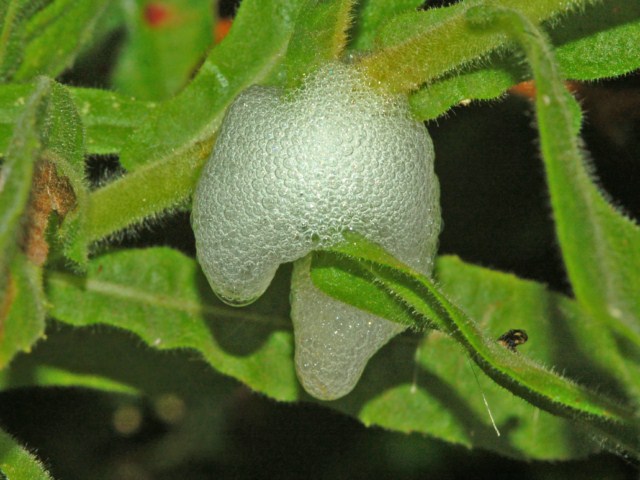
So what is cuckoo spit really? For a start it has nothing to do with cuckoos, but as it appears at around the same time as they start calling (or at least started calling) the two phenomena became associated. It’s actually made from plant sap, sucked from the host plant and whipped into a bubbly nest in which the young hoppers can hide from predators while they feed and mature.
Alienation from natural exploration
So how did we end up in this mess, where a large number of adults are unable to recognise as ubiquitous a natural phenomenon as cuckoo spit as something essentially benign? As a child I remember extracting froghoppers from their frothy nests and gently poking them in the bum to make them jump astonishing distances, a feat I singularly failed to encourage them to replicate for my nieces a couple of weekends ago. (The girls just wandered off in search of better entertainment or maybe hot chocolate, and I was left feeling vaguely guilty about encouraging them to mess with insects for fun). The reduction in children’s “roaming radius” and engagement with nature over the years has been widely lamented, and it would be easy to attribute this lack of knowledge of the natural world to the fact that today’s children didn’t have the same experience that I did. But the answer isn’t quite so simple – without making too many assumptions based on Facebook profile pictures, the majority of people I’ve seen mistakenly posting in gardening groups about this subject look to be older than me.
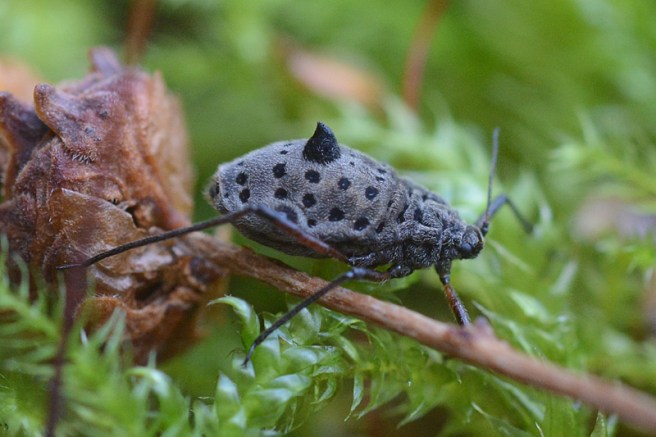
This lack of recognition of the commonplace, leading to fear when it’s brought to peoples attention, isn’t limited to froghoppers. In a previous life I wrote a blog post about meeting an intelligent, engaged conservation volunteer at a party and my shock after chatting to him for a while on discovering that he made a policy of killing anything he encountered that he didn’t recognise. This emerged when he told me about killing a cluster of what I recognised from his description as large willow aphids, remarkable beasties that are admittedly rather startling in appearance, up to half a centimetre in length and with three black “horns” on their backs, but are a native British species (with fascinatingly mysterious biology, apparently vanishing for four months of the year and getting by without males).
The problem, like so many others, can be laid in part at the door of the media, who’s business model based on fear driven clicks does promote a view of the natural world as a terrifying place full of flesh eating ladybirds, invasive killer spiders and plant-ravening plagues. But our disconnection from even the commonplace and the beneficial seems to go deeper than that. I was shocked at my allotment AGM when a woman spoke out against plans to keep bees on the site on the grounds that she found the the buzzing of bees, to me the sound of summer, irritating. This mentality that nature exists only for us massacres roadside verges before flowers can set seed in the name of neatness, rips pollinator-nourishing flowers from lawns in the name of uniformity, sees nature as an optional extra for human life that can be sanitised and tidied away the moment it causes even the slightest inconvenience rather than the fundamental basis upon which our continued existence depends.
I wish I knew what could be done about to tackle this biological illiteracy and the biophobia that spawns it, but the best I can think of is to keep sharing genuine information about and authentic joy in connection with the natural world, in the hope that if enough people do so it’ll outweigh all the scaremongering and misinformation out there. It’s not much but maybe it could be a start.

 Tangled Bank Foraging and Fibre Crafts
Explain to your nieces that spittlebugs blow bubbles out of their butts and then show them a good video of them doing it. I assure you, they’ll be much more impressed.
LikeLiked by 1 person