

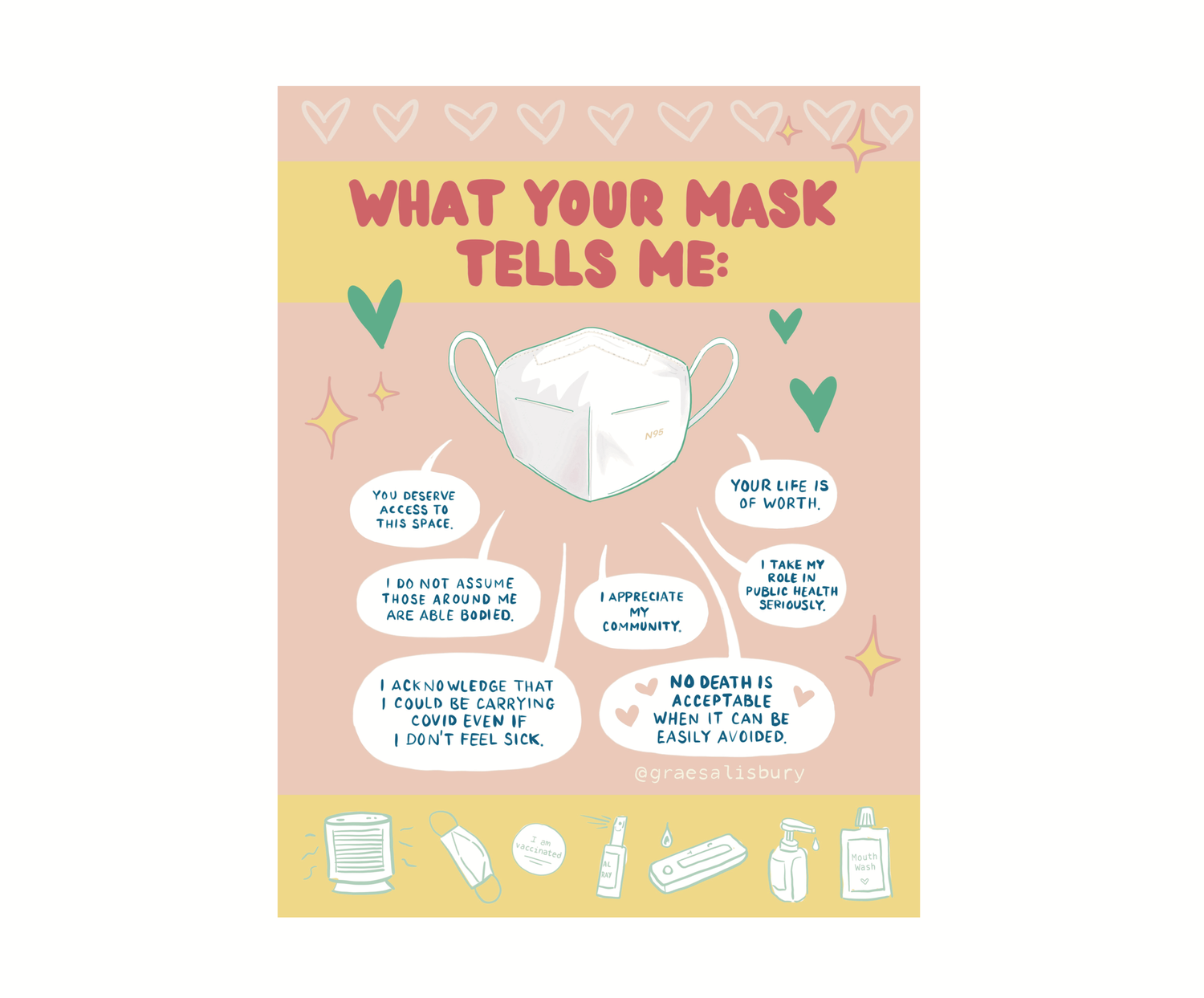
I’m still wearing a mask in 2026. In part it’s because of the inconvenience getting sick causes, making me fall behind in my weekday job and potentially lose money if I have to cancel my weekend craft courses. In part it’s because if I have to in a crumbling empire in a cyberpunk dystopia I feel I should at least be allowed to dress like it. But mostly I wear one because I’m furious that we have apparently collectively as a society decided that the ability of people with medical vulnerabilities to participate in public life is not worth the miniscule effort it would take to wear one. I am furious that we seem to have decided certain lives not worth protecting for the sake of the economy. I am furious that we as a society seem I am furious that we ended up in a situation where the government decided saving the hospitality industry was worth a second covid wave that caused 87,000 deaths. I am furious that the pandemic could have been a portal to a world where where we recognised that protecting and valuing one another was the most important thing we could do as a species, and instead we preferred a return to normal which we continue to justify by pretending its worst effects never happened and the people they happened to don’t matter.
I don’t want that world. I want one where we protect each other, where we reject the eugenicist framing that some disabled people are too inconvenient to protect and say every life is as valuable as every other. I’d say I was radicalised by the pandemic, but to be radicalised doesn’t have to require overthrowing the government or burning the system to the ground. Literally all you have to do is wear a small piece of plastic on your face. I don’t understand why that’s seen as such a huge demand.
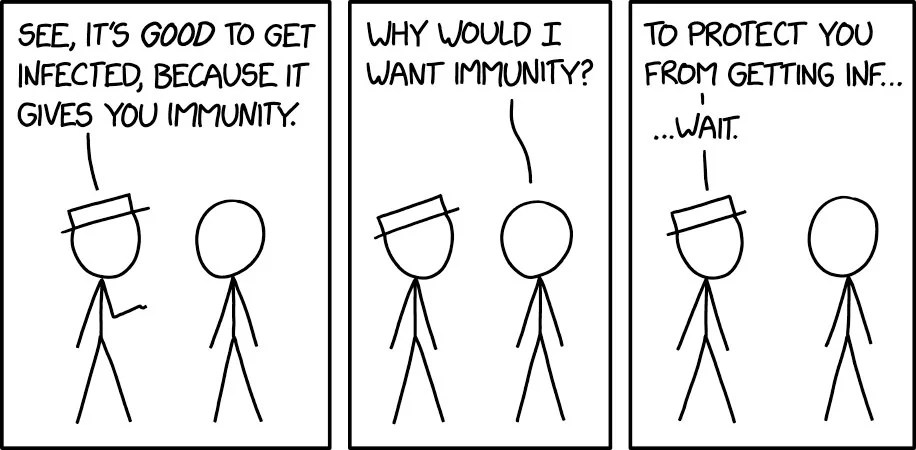
I also want to protect my own health. It really shouldn’t need saying but here we are, catching infectious diseases is bad for you. There seems to be an emerging contrarian idea out there that infections are good for you, and that making your body work to fight a disease is the same process as strengthening a muscle by making it work harder. But muscles respond to exercise signals like this in a carefully coordinated system designed by evolution to make the body work more efficiently. A better analogy for infectious disease is a the unplanned, uncoordinated damage of a wound. If you’re lucky wounded skin will heal to be just as functional as it was before the injury. If you’re unlucky you will be left with a scar that may be less flexible or less sensitive than undamaged skin, or may be more fragile and vulnerable to future injury. But there is no scenario in which wounded skin will heal to perform better than skin that has not been damaged.
When you get an infection viruses or bacteria hijack the cells of your body to proliferate in, ultimately destroying them. they may also release substances that cause further damage elsewhere. Your body’s own immune system may also overreact a scorched earth tactic, destroying the infected tissue to prevent the infection from spreading, and may become primed to overreact in future. Replaced the abstract terms cells or tissues with you blood vessels, lung lining or brain and you can see why getting infections is not healthy. Repeated infections may train your immune system to respond to the pathogen a bit faster the next time around, but the damage is still done along the way. It’s far safer to get vaccinated, teaching immune systems to recognise the pathogens without the damage to the body infections cause.
Most people without underlying health conditions will regain the same level of health as they had before an infectious disease like covid or flu over a period that can vary from weeks to months, but some will not. Two million people in England and Scotland, a hundred thousand of them children, are estimated to be living with the post-viral condition long covid and the official government response to this seems to be to pretend that they’re making it up. That is an astounding toll of human suffering, physical, psychological and financial due to the lack of support people who can no longer work are receiving. And for political leaders who prefer to think in terms of economic costs than human wellbeing, it is estimated that long covid will cost OECD economies up to $135 billion a year over the next decade due to people leaving the workforce, lower productivity, and healthcare costs.
We are living in time of interconnected crises, where the damage done to our biosphere by the last century or so of industrial civilisation is increasingly outpacing our planet’s ability to absorb it and the highest human population in history is increasingly vulnerable to its impacts. Our political leadership seems to be turning away from the idea we need to protect one another, slashing budgets for public health both in country and aid programs to the wider world in spite of the fact that diseases don’t respect borders. While the UK isn’t far behind the US is one of the worst offenders here, with a leadership that seems ideologically opposed to disease control. Unfortunately it is also the worst country imaginable to deliberately sabotage its public health infrastructure, being unique globally in having a large population who lack access to healthcare among whom disease can spread but who can still afford to travel widely both nationally and internationally, importing and exporting pathogens freely. Add to this a network of vast industrial factory farms full of stressed vulnerable animals and you have the perfect breeding ground for future pandemics .
The good news is that the vast majority of people want to help each other and do the right thing. The bad news is that we humans are pretty awful at working out what the right thing is, which is why we have a climate crisis and why people think the most helpful thing we can do about it is recycling and changing lightbulbs rather than reducing flights, car journeys and meat consumption. We tend to take the mental shortcuts of assuming the correct course of action is what we see the people around us or the people we look up to us doing. We stop masking when everyone else on the bus is no longer wearing a mask; when celebrities and influencers act as though covid is over. And when our political “leaders” hypocritically flout the rules they impose, we tend to follow their example.
There are sound psychological reasons for this – throughout most of our evolutionary history, doing what the people around us were doing or what the people who looked to be successful were doing was a good way to survive. If everyone else in your tribe is avoiding the scorpions it’s probably a good idea to do so too even if you haven’t independently tested how much their sting hurts. If the impressive spearfisher who always hauls back a huge catch is going to the south side of the bay not the north side you’d probably be best off following her rather than wasting time testing the fishing in every spot for yourself. But the world has changed, or rather we have changed our world, and the strategies that worked best for most of our history may not work so well anymore. We can’t afford those cognitive shortcuts anymore, we have to be better than our leaders.
Which mask to wear
We have the technology to reduce the transmission of airborne infections in public spaces like schools, offices and nurseries through air filtration but have chosen instead to put the responsibility on individuals to protect themselves. Air purifiers with HEPA filters that remove virus particles (as well as allergens and pollutants) from the air have been shown to dramatically reduce the transmission of infections in schools, yet schools are rejecting offers of donated air purifiers because they feel they are unnecessary. No one would accept the idea that instead of removing pathogens from our drinking water we expected everyone to carry around Life Straws at work or when eating out, but this is the attitude we take to clean air.
By now the evidence is pretty conclusive that the most effective type of mask is the N95 (US) or FFP2 (European), also called a respirator in some places, which doesn’t just filter but attracts airborne virus particles using electrostatic charges. While valved masks protect the wearer from virus particles in inhaled air they do nothing to protect passers-by from any viruses in exhalations so should be avoided. Surgical masks and cloth masks trap droplets containing virus particles but are less effective against free floating virus particles, and surgical masks do so more effectively than cloth masks. So the order off effectiveness is N95/FFP2 > surgical > cloth, with the caveat that a well fitted cloth one say will be better than a gappy N95. There’s a helpful guide to how to find the best mask for your face shape here.
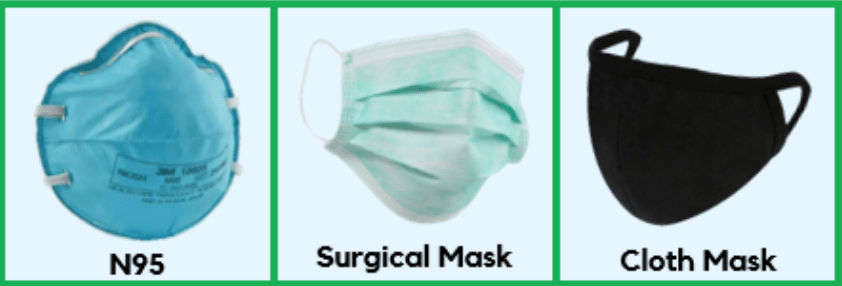
HOWEVER any mask is better than no mask! We are more likely to get masking to a population level where it would have an impact on disease transmission if everyone wears whatever they can, because a majority of people using cloth masks is going to be more helpful than 1% of people wearing perfectly fit tested N95s.
So given the above why isn’t everyone wearing an N95/FFP2? Everyone’s risk calculus and the weight they put on different costs and benefits is going to be different. For a start N95/FFP2s may not be available in many majority world countries. Here in the UK the best source of the widest variety of masks is probably The Facemask Store. They are also expensive single use or at least limited use items (I am aware many disabled people struggling to survive in a country that seems to have decided their existence is a luxury we can’t afford are reusing them more than is recommended).
Cloth masks on the other hand are infinitely reusable and everyone probably still has some about the house from the early stages of the pandemic. Surgical masks seem in many ways to be the worst of all possible worlds, combining the lower effectiveness of cloth masks with the environmental and cost issues of disposables, but I am aware that some people find them most comfortable. For those who need the most effective masks available but struggle to afford them it’s worth checking if you have a local Mask Bloc which distributes masks and potentially other types of PPE and healthcare supplies. Alternatively if you have money going spare consider supporting your local Mask Bloc if you can!
Disposable masks are also more environmentally damaging than washable cloth masks, made of single use plastic and packaged in single use plastic. Up to 15 trillion face masks are estimated to be used globally every year, resulting in 2 megatons of waste. Here your cost benefit weighting is obviously going to depend on your estimate of your degree of vulnerability – if you’re wearing a mask mostly to protect yourself you’ll want the most effective one possible, but if you’re trying to avoid harm to others you have to weigh infection harm against environmental harm. And unfortunately although solutions like feeding plastics to insects make good headlines it would take 100 mealworms four and a half months to consume a single facemask so it’s not really a scalable solution currently.
I tried to navigate this by wearing different masks in different situations. I personally don’t judge myself to be particularly vulnerable, so am primarily wearing a mask to protect others, but I’d still like to avoid getting ill as much as possible. I started out by wearing a cloth mask for cost, comfort and environmental reasons in everyday situations like shopping, day to day commuting or meetings with colleagues, but wearing an FFP2 mask if I was in any way ill. I also wear an FFP2 when the data for respiratory infections suggest they’re high or rising rapidly. You can follow a good weekly summary of the status of Covid and other respiratory infections in the the UK here, compiled with data from the UK national flu and COVID-19 surveillance reports. I also wear an FFP2 wherever I’m with a lot of other people in an area of poor ventilation, like long train journeys, conferences, gigs etc and after coming back from a situation like this until I’m sure I haven’t picked anything nasty up. Finally I started wearing an FFP2 mask in the run up to events I couldn’t afford to miss by getting ill, like family celebrations, conferences, teaching booking or blood donation appointments.
As is probably becoming apparent, the proportion of the time I wear a reusable cloth mask has been steadily decreasing but I was feeling guilty about the amount of plastic waste my N95/FFP2 habit was generating. It was time to find a better option.
The Flo mask
I’d seen more and more people on Mastodon talking about the Flo Mask, and shortly after reading this positive review their European site had a sale so I decided to take the plunge.
Adult Flo masks come in two sizes, 1 for people with lower nose bridge (most common for those of Asian, Pacific Islander, and African heritage) and 2 for people with higher nose bridges (most common for people of European and Hispanic heritage). If you’re not sure which category you fall into there’s a printable measuring tool on their website. There is a disclaimer on their website that the masks won’t fit 10% of the population with particularly narrow or Roman noses. I was on the edge of too narrow but just made it, and having sympathised with friends of East Asian or West African heritage struggling to find outdoor clothing sized for their bodies I find it quite refreshing that the default body size and shape used for design that might not accommodate people of other ethnicities isn’t European for a change.
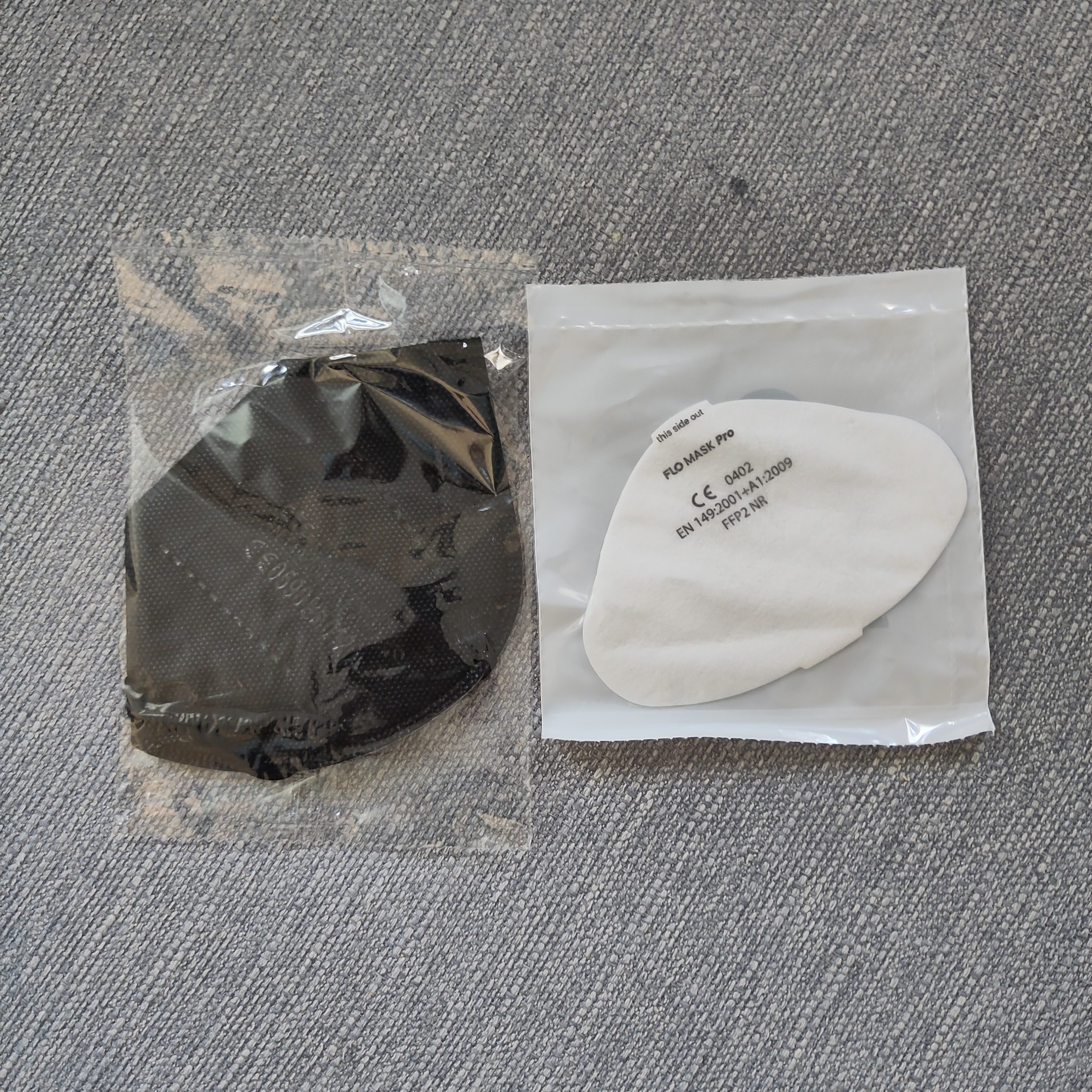
I do have to say that the mask body is pretty expensive, costing £68 at the time of writing for an adult model. A 50 pack of replacement filters costs £46, compared to around £9-£10 for a pack of disposables from The Facemask Store, and in another “Brexit bonus” postage from Ireland is about £14. The postage estimate incidentally said seven days but it took slightly over two weeks, so just be aware of this if you’re hoping to get one for a specific date. Delivery also requires a signature, which I didn’t realise – had I known I would have had it delivered to my work rather than home address.
This is a huge expense even with the replacement filters coming free on the two for one deal and I realise that I am very privileged to be able to pay it. Masks can be a significant expense for many, and infectious diseases are often more of a threat to those in poverty who can least afford them and are likely to be living, working and commuting in more crowded conditions. Like the fact that it is now necessary for most people in the to pay nearly £100 for covid vaccination, the shifting of the costs of public health protection is not only a short-termist economic own goal it’s an ideological rejection of the idea that we have an obligation to protect those more vulnerable than us in society. This is why I feel it’s incumbent upon those of us who can afford to take disease control measures to do so, even if it shouldn’t be an individual responsibility in the first place.
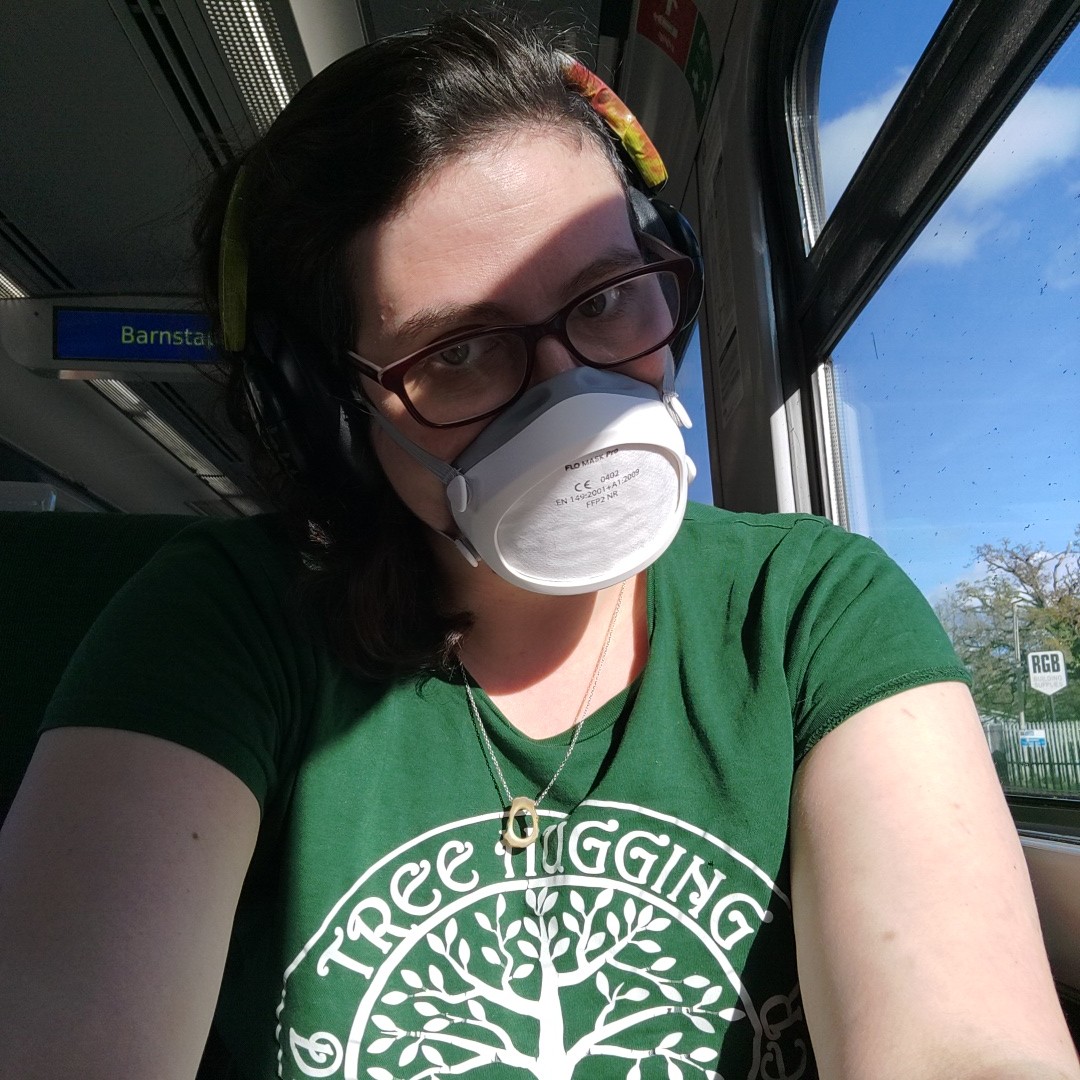
I took my new Flo Mask out of the packet, put it on for the first time, and my wife burst out laughing and said I looked like Bain. Needless to say this was not a reaction I particularly wanted from someone I would like to find me attractive, and it also made me worried that the mask could look intimidating. I teach various heritage crafts and skills at indoor events and wouldn’t want my mask to put potential customers off. I’ll explain what I tried to do about this after reviewing the mask itself.
The positives
First of all the Flo Mask is initially and for short periods of time the most comfortable mask I’ve ever worn. Some issues do arise in the longer term, which I’ll discuss in the next section, but the double back of the head strap is far more comfortable than ear loops even using ear savers and the silicone mask back conforms to the shape of my face perfectly. The mask is supplied with a ring of black foam padding but I took that out because it just seemed to fall out and flop about annoyingly inside, and even without it it’s perfectly comfortable. It produces a perfect seal to my face too with no fogging of my glasses, and the stretchiness of the straps make it easy to pull the mask away from my face briefly without taking it off completely to take sips of water. Straps snapping off the body when I tried to do this was one of the main problems I had with disposable masks breaking.
Although Flo Masks still use single use disposable filters which come in plastic packaging, they use less single use material overall than the disposable masks I had been using, containing half as much filter material, and not requiring a metal nose wire and elastic straps to be thrown away every time. They also score highly on the sustainability front by selling replacement parts like straps and pegs individually, so if one tiny component breaks you don’t need to replace the entire mask.
The negatives
I’m going to start by saying the issues I have encountered probably have more to do with my personal life circumstances and others may not experience them. They also don’t outweigh the many advantages of the mask outlined above. However something I have really struggled with in comparison to the more permeable disposable FFP2 masks is how sweaty the Flo mask gets in hot conditions, both inside the mask and where the silicone touches my face. I will say that I’m probably using it in hotter conditions than most users – I commute on trains that aren’t air conditioned and work in a greenhouse and in an office in a British University building constructed in the 1960s before the climate warmed. I also do a lot of walking and cycling to get around so my base body temperature may be a bit higher than average. But I have really struggled with how wet the inside of the mask gets.
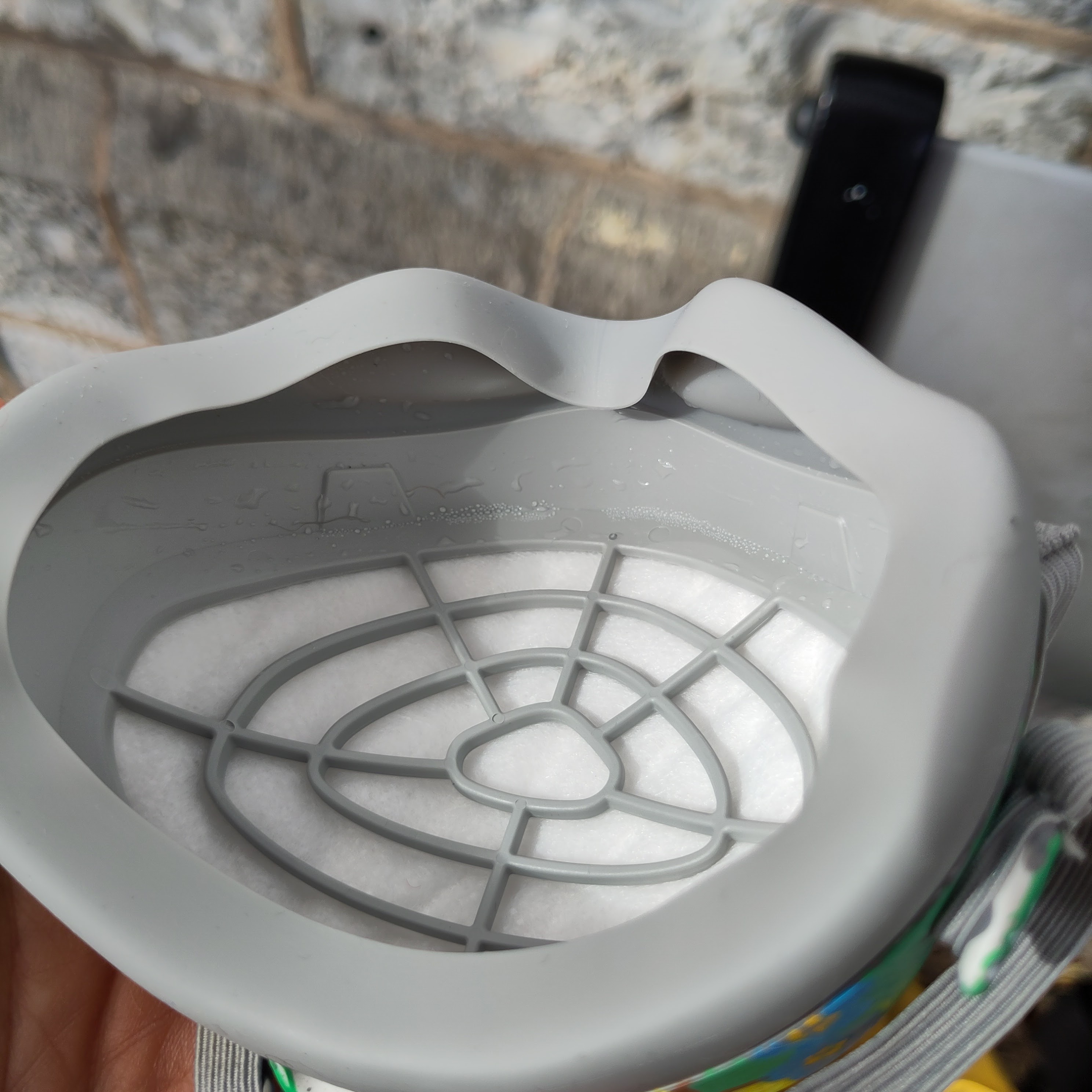
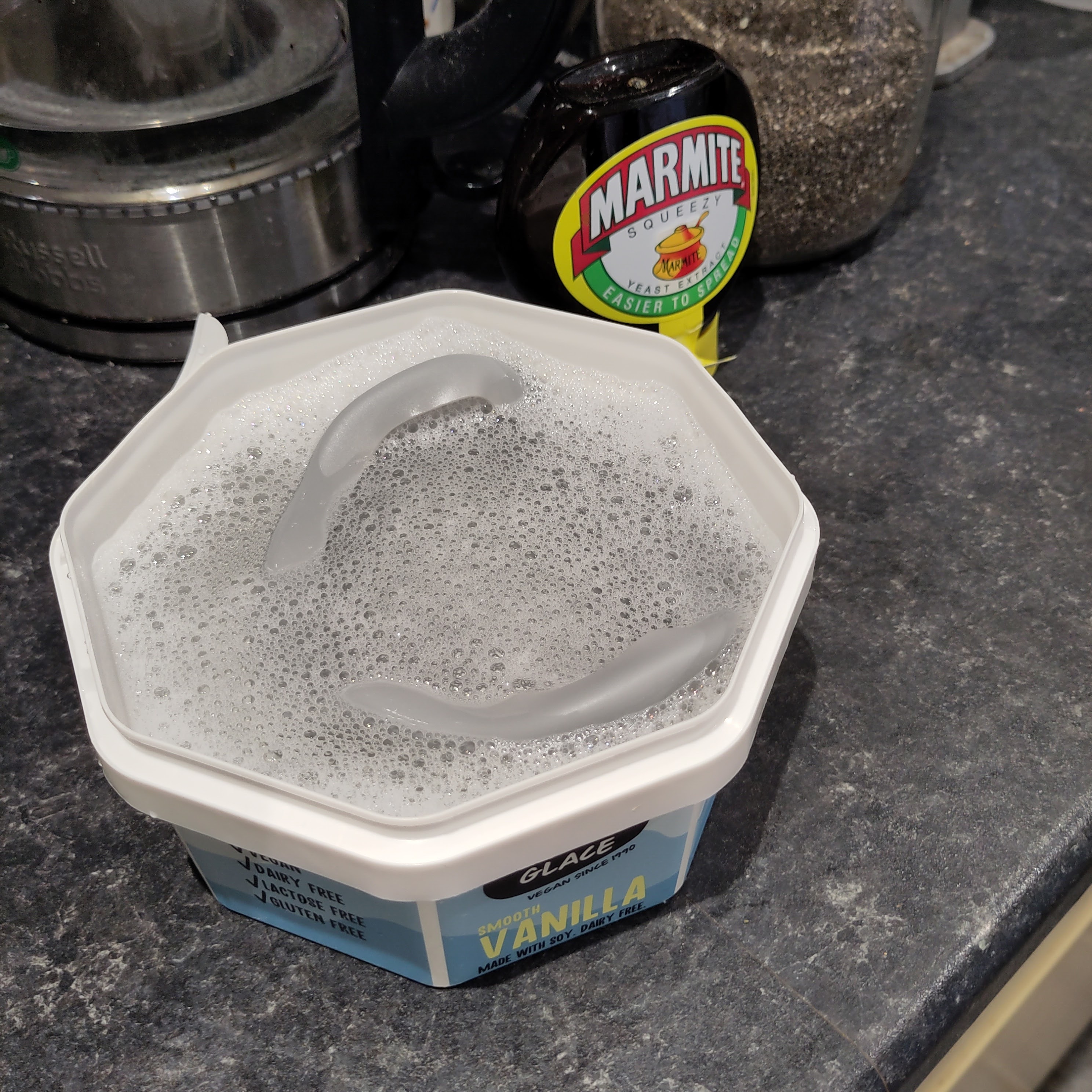
I have also found that, presumably because of slight static charge, the silicone face rest is an absolute magnet for fluff and cat hair which can get quite itchy. Both of these issues mean I’m having to wash the back of the mask much more frequently than I expected to, which is a little disappointing as the filters are rated for 40 hours of use so I was hoping I could get about a week’s wear out of them to save money and waste but am instead having to change them every day or two when I take the mask apart to wash it. The back part is at least easy to clean with warm water and washing up liquid, and I’ve found a Swedish Glace ice cream tub is the perfect size to do it in. Washing the mask after getting home from work and then leaving it on the draining board overnight means it dries by the next morning.
Solving the Bain problem
In order to try and make the mask look less utilitarian and intimidating I decided to paint flowers on the detachable front piece using acrylic paint pens. I recently decorated my headphones this way, but although they looked good at first the paint quickly started to chip off and I didn’t want that to happen with my mask. After consulting with my friends who paint wargame miniatures and/or tiny trains I discovered that you need to use primer to ensure acrylic paint sticks to plastic, so that was my first step.
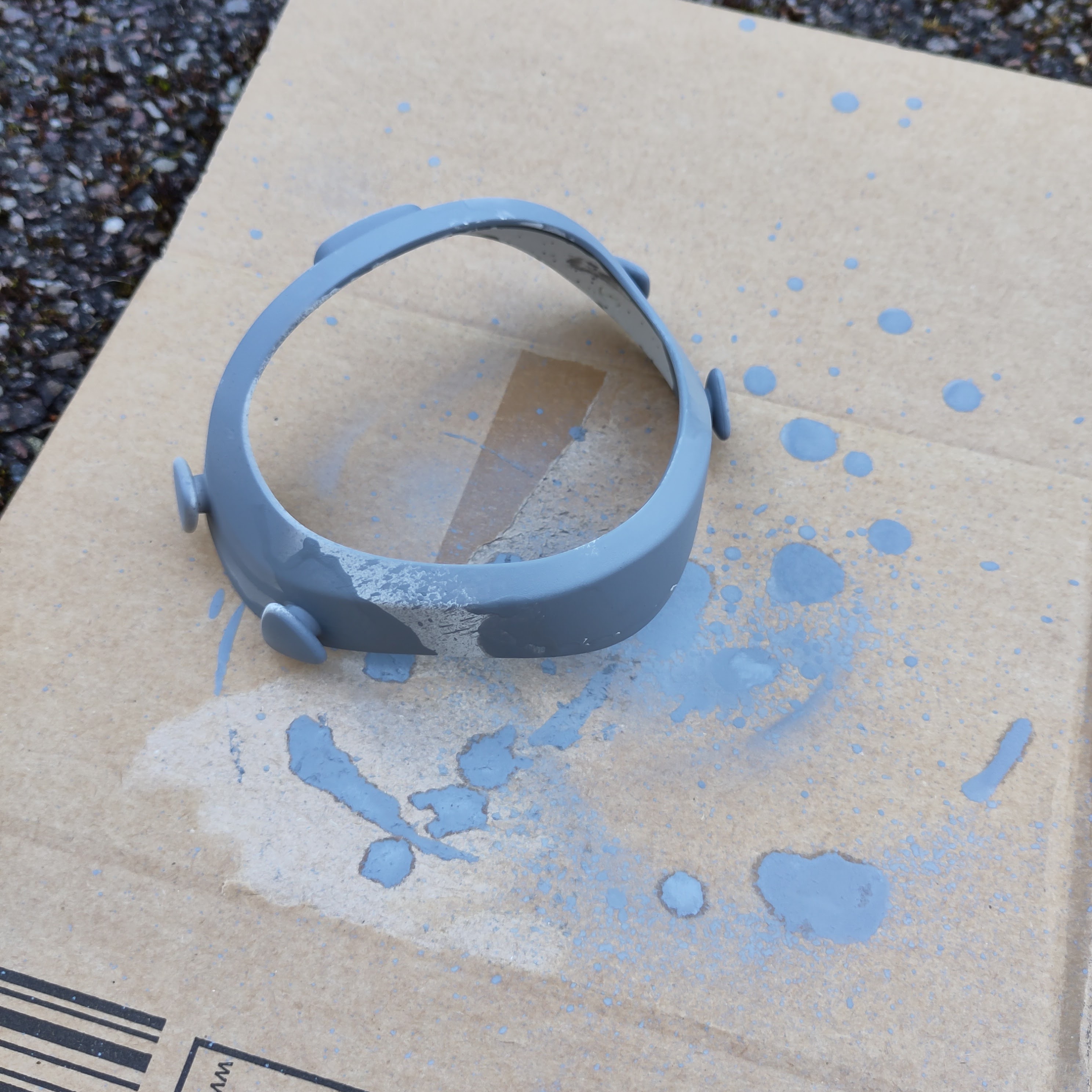
There is a stage of every new craft project where you think “Oh God I’ve made a horrible mistake!” and this was it for me, when I could smell the solvents from the primer for the rest of the evening on this thing I was planning to wear in front of my nose. Fortunately the smell did completely dissipate by the next morning.
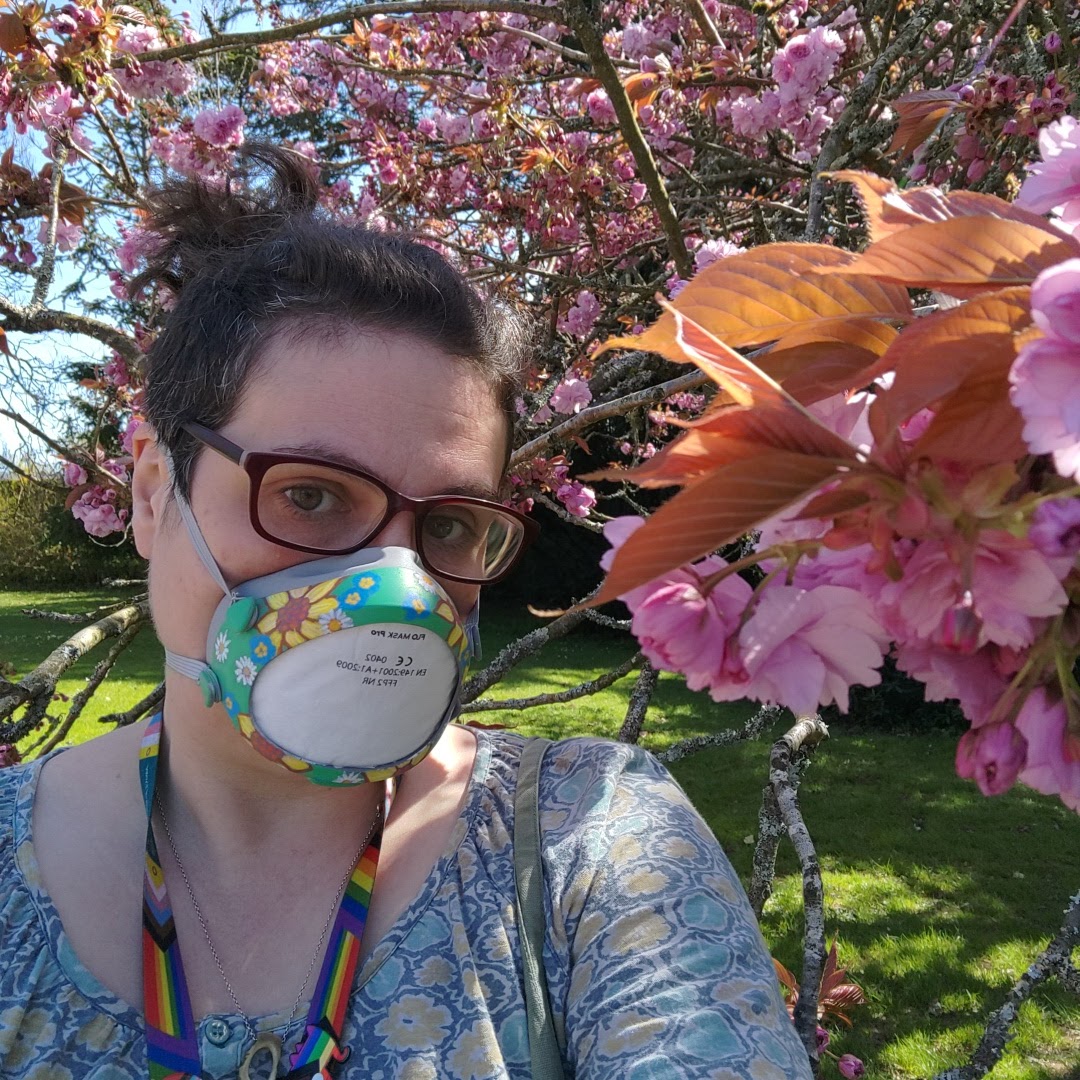
This was the finished object which I think came out rather well. Sunflowers are my favourite flowers and I love daisies and forget-me-nots too.
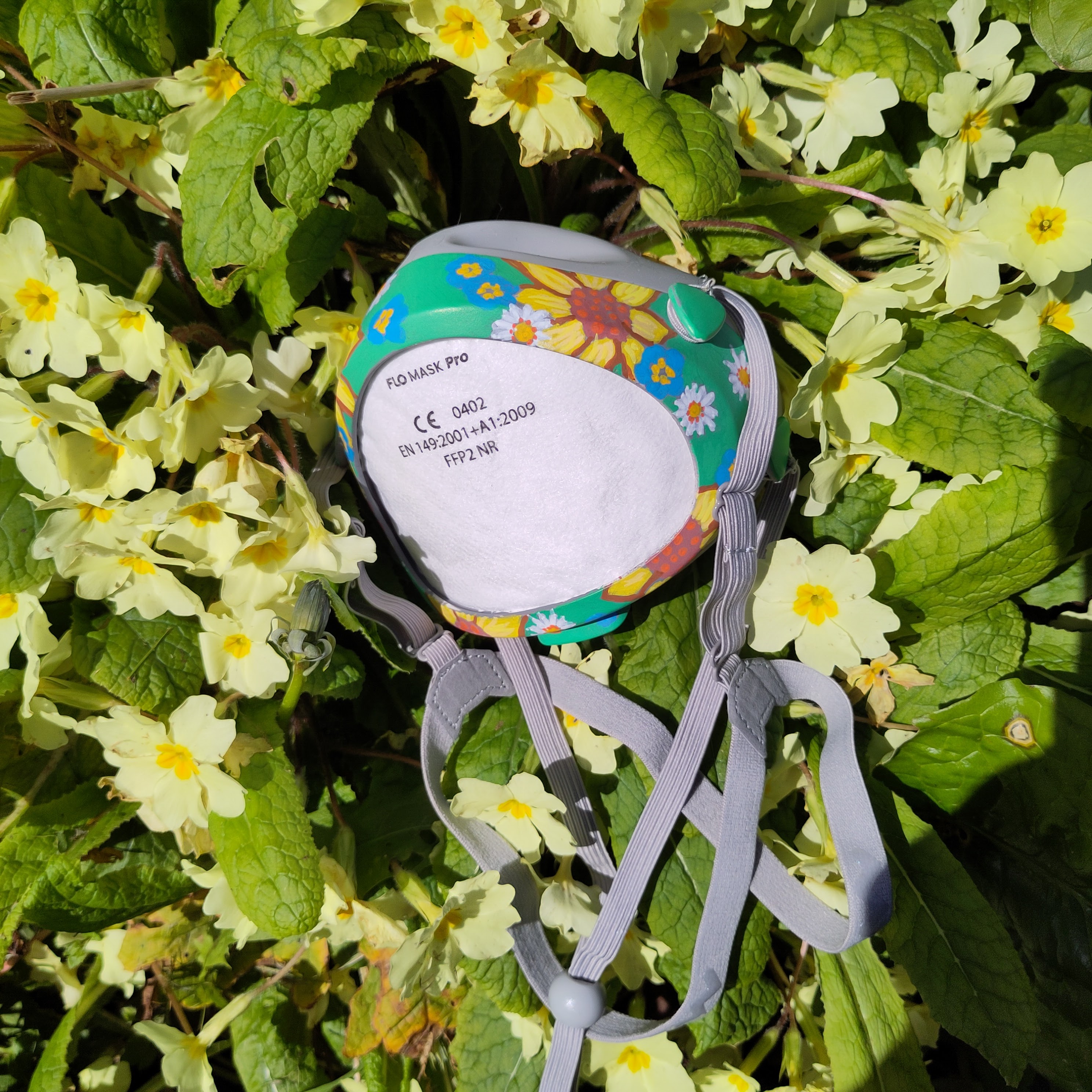
Incidentally I’m not the first person to have had the idea to decorate my Flo Mask – the creator of this Instagram video used temporary tattoos and I could see a lot of scope for using stickers, decoupage or washi tape. Some people have also 3D printed accessories to clip on. When I can afford it I’m very tempted to get some more front covers to experiment with.
Reactions to my mask
I have had a few hostile reactions to masking in the past, although the impression I get is what we experience in the UK is nothing compared to what people are getting in the US. In the decades to come I’m sure hundreds of theses will be written on how mask wearing, the most effective intervention we have against respiratory infections, has become so politicised that it has now been banned in parts of the US and widely ignored elsewhere. Let’s just say that I now understand how there was so much pushback against the idea of handwashing in medical settings when it was first proposed.
I haven’t so far had any negative responses to wearing my Flo Mask. I have had a few people staring on public transport, but honestly at this point I’m a flight free, car free vegan who doesn’t shave her body hair and was dopamine dressing before it had a name, I’m used to being a bit out of step with the rest of society. There’s a Quaker saying along the lines of not letting the fear of being seen as peculiar stop you from doing what’s right, and I have always lived my life that way without really consciously trying.
I do worry a little that my wearing a mask makes it seem like something only odd people do, rather than normalising it for everyone, but let’s face it I’m not any sort of trendsetter or influencer. I get about 20 views on your average post. If I’m lucky someone shares it and that goes up by an order of magnitude, if I’m extremely lucky wasn’t some idiot ranting about wokeness who shared it. To maximise my reach I should probably be breaking these ideas down into bitesized chunks and making 30 second videos of me dancing while sharing them, but frankly that sounds exhausting and anyway the dancing thing was probably about three centuries ago in TikTok time and is now cringe. Maybe the word cringe is itself now cringe. And I should probably stop this line of thinking now or I’ll start reminiscing about the early days of the web when information was mostly shared in good faith and not seen as a revenue stream (on the small part of the web not dedicated to porn anyway), and then I’ll start lamenting the demise of RSS and at that point frankly you may as well put me to bed with a nice warm (oat) milky drink.
I hope that if you have stopped wearing a mask in places without much air exchange this post has made you at least consider starting again, whatever type of mask you might choose.

 Tangled Bank Foraging and Fibre Crafts