
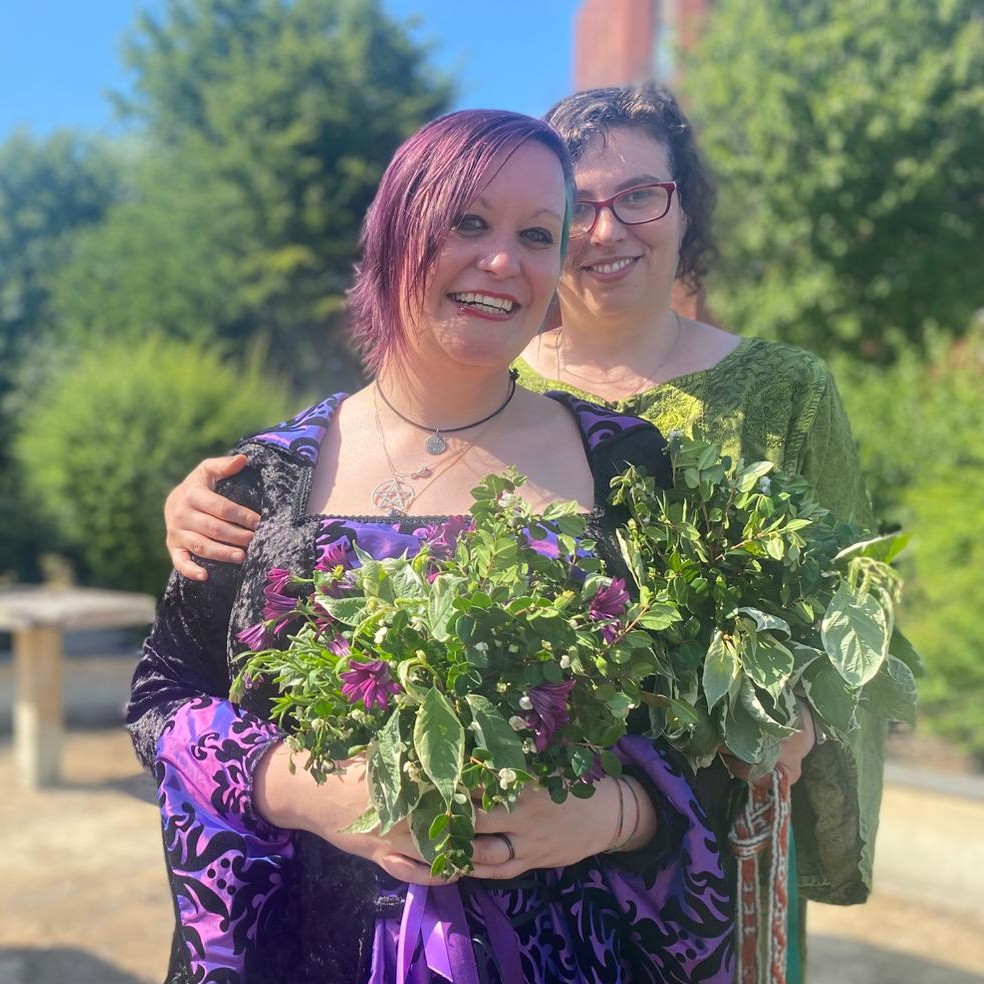
I was so lucky last month to marry Charlie, the most wonderful person I’ve ever met. I wish I was a better writer, I’m rather better at facts and figures about carbon sequestration than I am at heartfelt romance so I can’t really do the whole experience justice but it genuinely was the best experience of my life and I am so grateful that she wanted to share this, and the rest of her life, with me.
Our wedding was a celebration of our love for one another, but also of our love for all of our wonderful friends and family around us and of the beautiful, remarkable planet that supports us all. We wanted to honour that love as much as possible in the choices we made for our ceremonies and celebrations, trying to do as little harm to the natural world and to the future lives of all the young people who celebrated with us as possible. But it wasn’t just about minimising our impact, we also wanted to show that trying to make sustainable choices can be a source of joy and connection, sharing delicious food in a beautiful place, laughing and joking while erecting tents and gazebos together, catching up with old friends and making new ones over the connections we share. We’re not perfect, we didn’t do everything to the highest standards possible, and we want to acknowledge that not everyone has the resources, whether money, time, energy, physical capacity or support that we do. We do live in a world where the more sustainable choices are rarely the default ones so are often more difficult to do, and so not everyone is able to make them. But part of the reason the more ethical choice is often the harder one is that the economy we live in is built on ever greater consumption, of fossil fuels and plastics and animal products, and to keep growing companies need to keep convincing us that this consumption is what makes our lives worth living and that all a more sustainable lifestyle can offer is a life of deprivation, frugality and misery. I hope this post goes some way toward demonstrating that this is very much not the case.
The venue
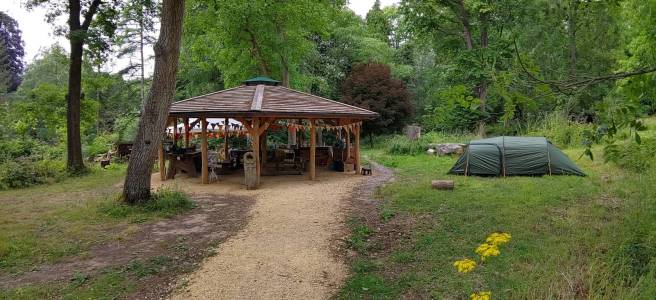
We got legally married at Cannock registration office, then had the handfasting and celebration the next weekend at Tortworth Arboretum, a beautiful community run space just outside Bristol which will always be special to us as we took our first camping trip here. One of the ways Charlie and I first connected was over our shared love of the natural world, and it felt right that we should start our shared life together in a beautiful woodland, witnessed by the trees and birds as well as our human friends and family.
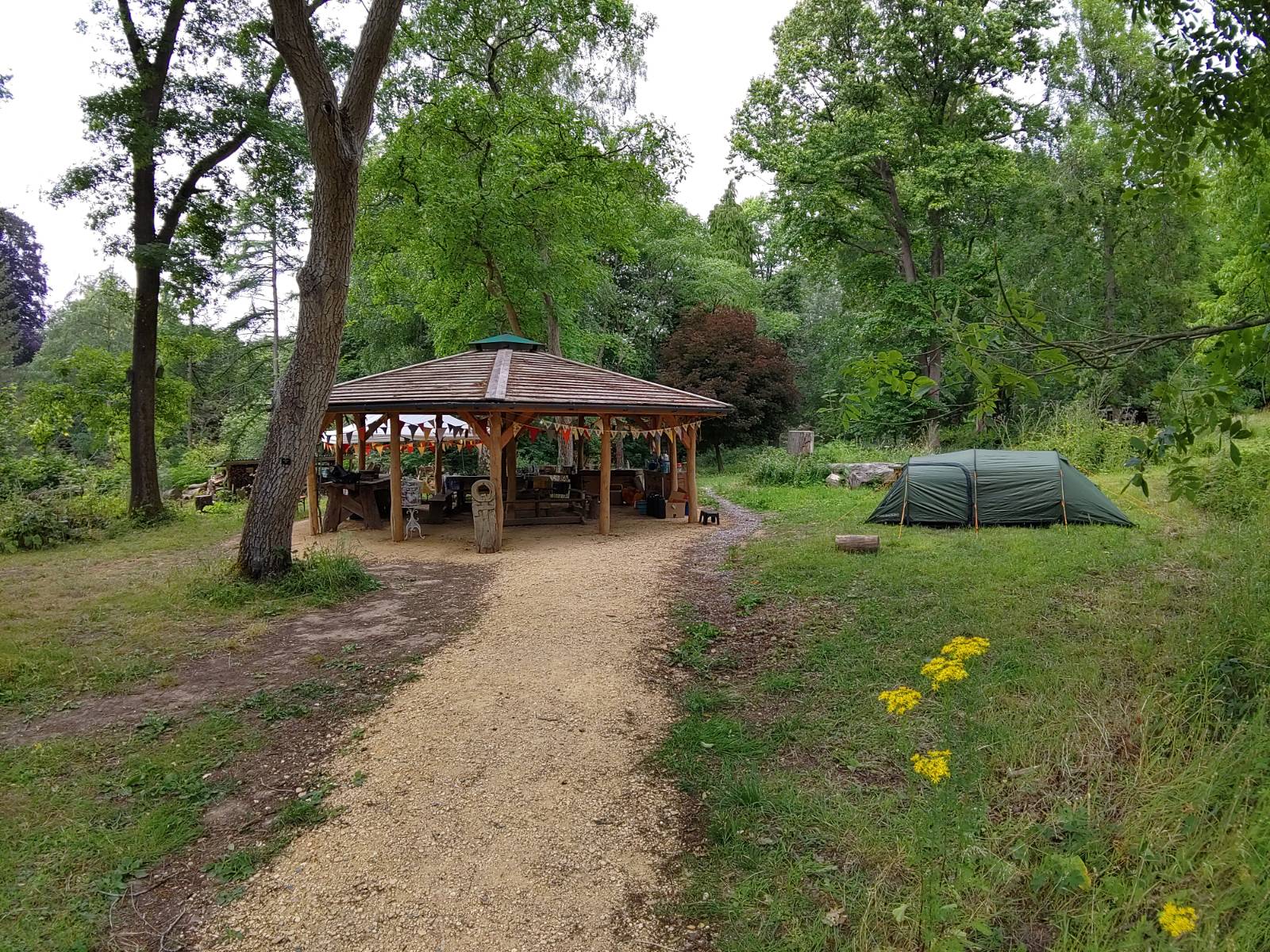
The arboretum was established in 1853 by the third Earl of Ducie, Henry John Moreton, who shared the popular Victorian hobby of wandering round the world and pinching anything that looked interesting. He focussed on trees, and you can learn more about the beautiful specimens in Tortworth’s collection here. After his death in 1921 the arboretum was neglected until the end of the second world war, when Leyhill Prison took it over to teach prisoners woodland management skills. Unfortunately in the 1990s the government decided that offering prisoners education in useful skills was basically communism, and the arboretum entered a second period of neglect.
In 2014 the site was offered to a local community group, who doggedly battled the rhododendron and brambles swamping the trees, built the roundhouse, and made the Arboretum into the beautiful community space it is today. It now plays host to a variety of local community groups tackling mental ill health, addiction and isolation as well as offering woodland management volunteer days, course and events for the entire community. As well as the its meaning to us as a couple, we decided that if we were going to give a lot of money to a venue we would rather it were somewhere that does important work for nature and the community than some random hotel.
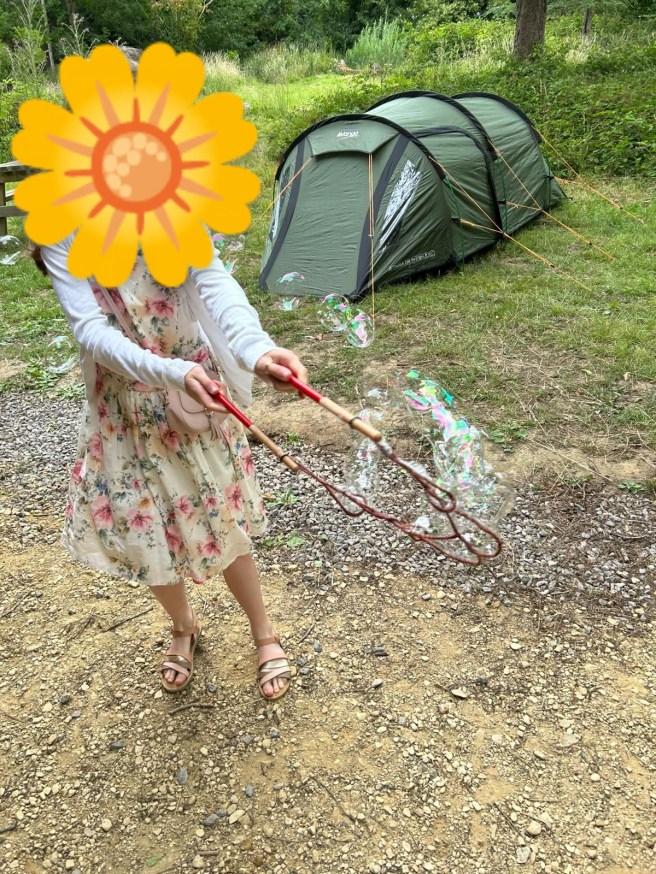
Because of the ecological sensitivity of the site confetti, even biodegradable confetti, isn’t permitted. We asked our guests to respect this on our website and by email, and provided vegan, biodegradable bubble mixture to use instead from Dr Zigs who donate to grassroots humanitarian efforts through their Bubble not Bombs initiative.
Transport
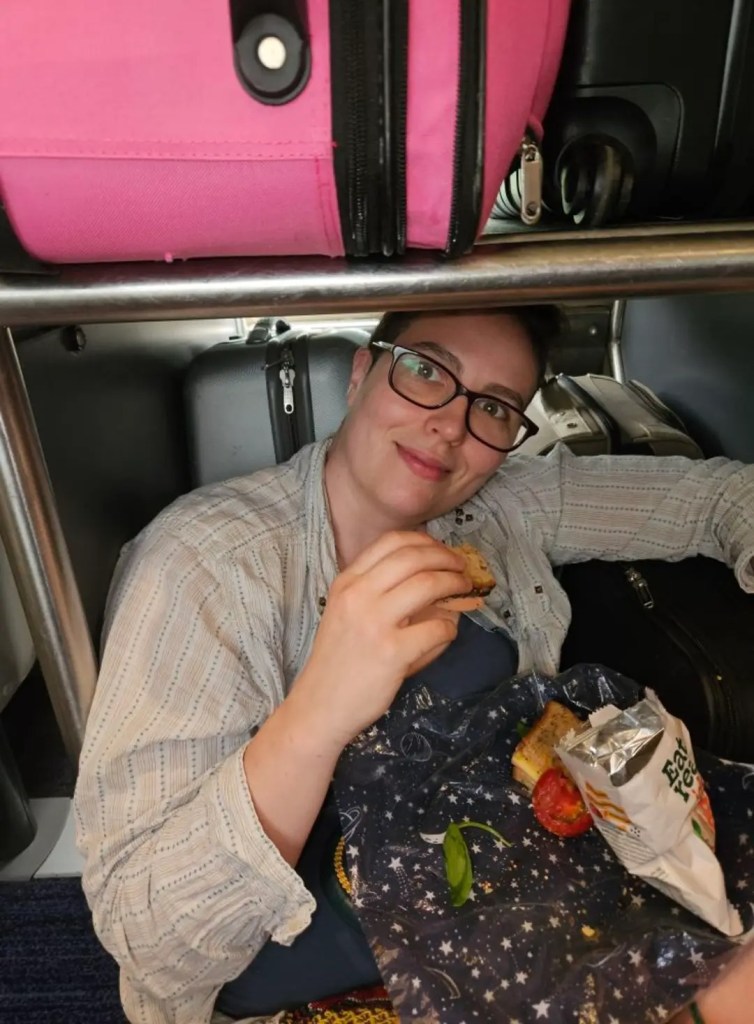
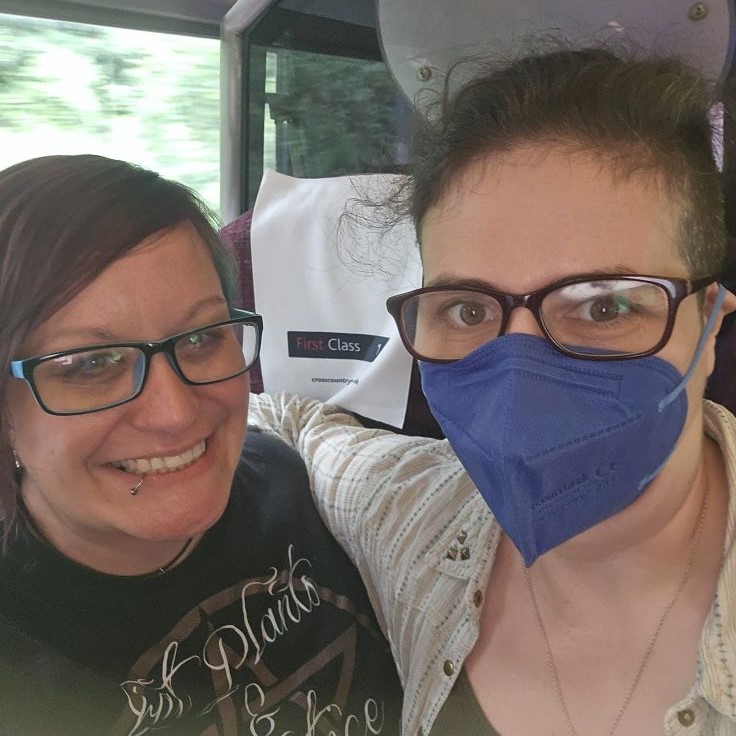
We travelled to and from our civil ceremony at Cannock registry office (chosen to allow Charlie’s father, who has mobility limitations, to attend and walk her down the aisle) by train. I’ll be honest, both train journeys were an object lesson in why people who have that option available usually prefer to drive, and shows the limitations of individual action within a system where the most sustainable choice is not the most convenient, comfortable or affordable. On the way up the two trains before ours were cancelled, resulting in three trains worth of passengers trying to fit on one and me trying to fit in the luggage rack. on the way back part of our journey was by rail replacement bus which was so delayed we missed our first connecting train, and the next train got us in to Birmingham New Street with only few minutes to run to our train down to Exeter and no time to pick up the takeaway we’d ordered for lunch on the way. Our fortunes then improved dramatically as a friend of Charlie’s who worked for the train company got us upgraded to first class, but they definitely weren’t the best journeys I’ve ever made even if they were for the best reason.
To encourage our guests to come by train rather than car to our woodland celebration, both for emissions reasons and because parking spaces at Tortworth are limited, we hired a minibus from Bristol station and back. While there are issues with carbon offsetting, for what it’s worth the minibus company we went with offsets its emissions through Greenpaw.
Food
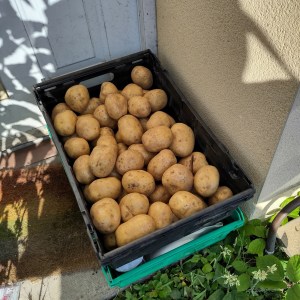
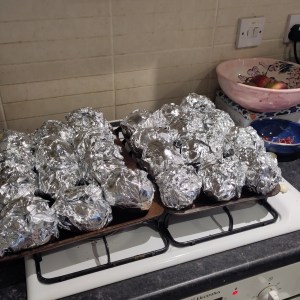
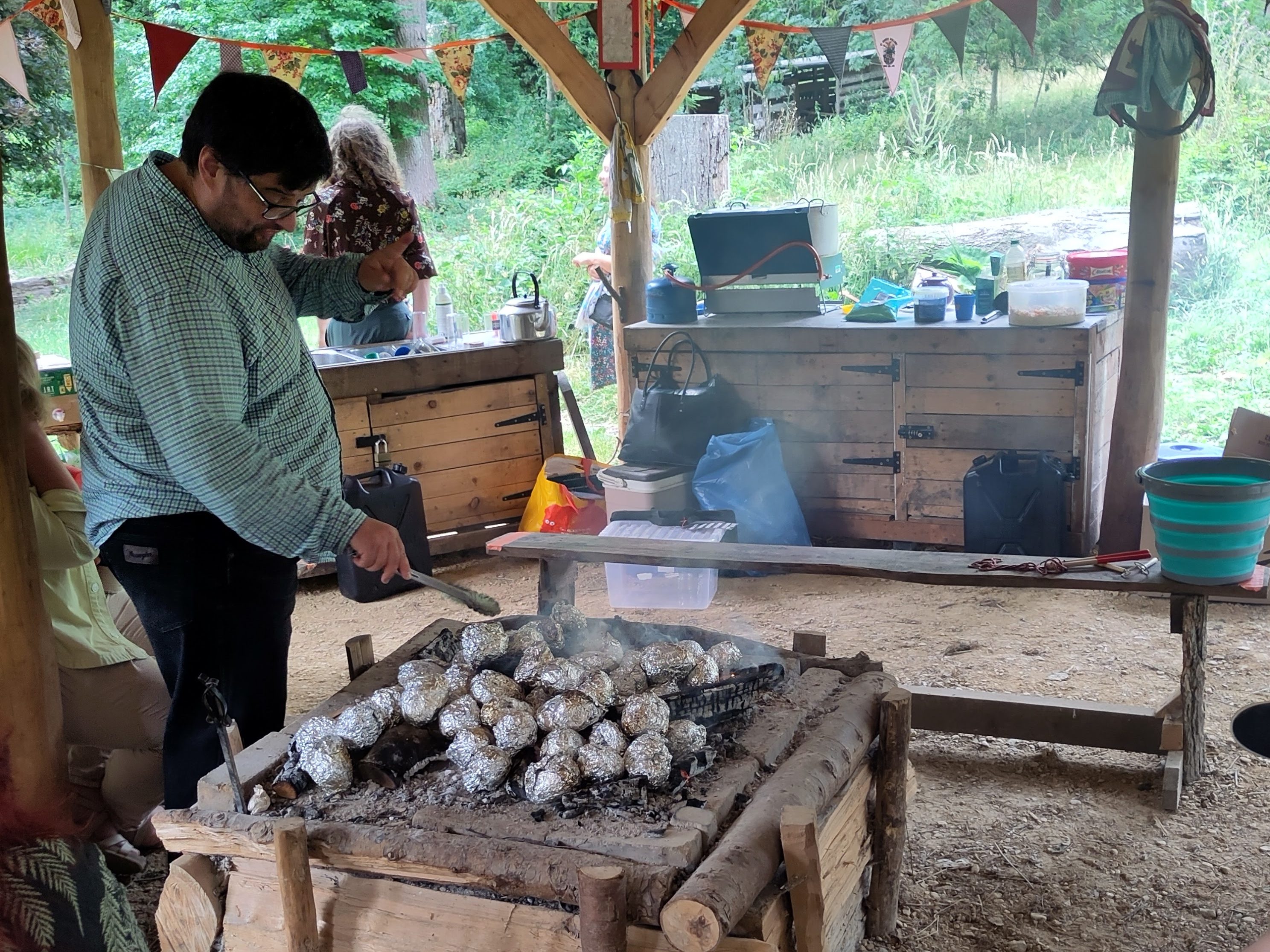
It felt significant that during the recent UK flooding caused by Storm Bert, when I was unable to get to work for several days due to floodwater and trees on both the road and the railway line, supermarket deliveries couldn’t get through and the local GP surgery had to operate a reduced service as a lot of staff couldn’t get to work, the one thing that stayed open as usual was the village’s farm shop and our Devon veg box delivery was only delayed by one day. COVID should have taught us but didn’t that global supply chains are vulnerable to disruption from all manner of disasters, whether disease or extreme weather, which will become more common with climate change. We should be doing more to invest in local small scale food production but sadly quite the opposite seems to be happening. Our previous local veg box supplier Down Farm shut down last summer due to financial pressures and the effect of the unusually wet weather on crops. We now get our weekly veg box from Shillingford which is only slightly further away, and were able to order a 15 kilogram bag of potatoes for campfire jackets delivered directly to our door alongside it. We baked these at home, popped them in the freezer and transported them frozen (helping keep the other food cool) then reheated them in the fire and crisped up the skins. Although the aluminium in the foil is very environmentally damaging to mine, it is at least endlessly recyclable and rather less messy than covering the spuds in clay! We enlisted the kids’ help to ball up the foil into tennis ball sizes, which are easier for recycling plants to process than small pieces of loose foil.
As a society we’re increasingly waking up to the horrendous environmental cost of industrial animal agriculture, whether in terms of carbon emissions, the need to dispose of animal waste or the inefficiency of using land, water and fuel to grow crops and then feeding them to animals instead of eating them directly. And that’s before taking animal welfare or the danger of spawning future pandemics by cramming stressed, exhausted animals together at unnatural densities into consideration. For all of these reasons we planned to have entirely plant-based food at our wedding.
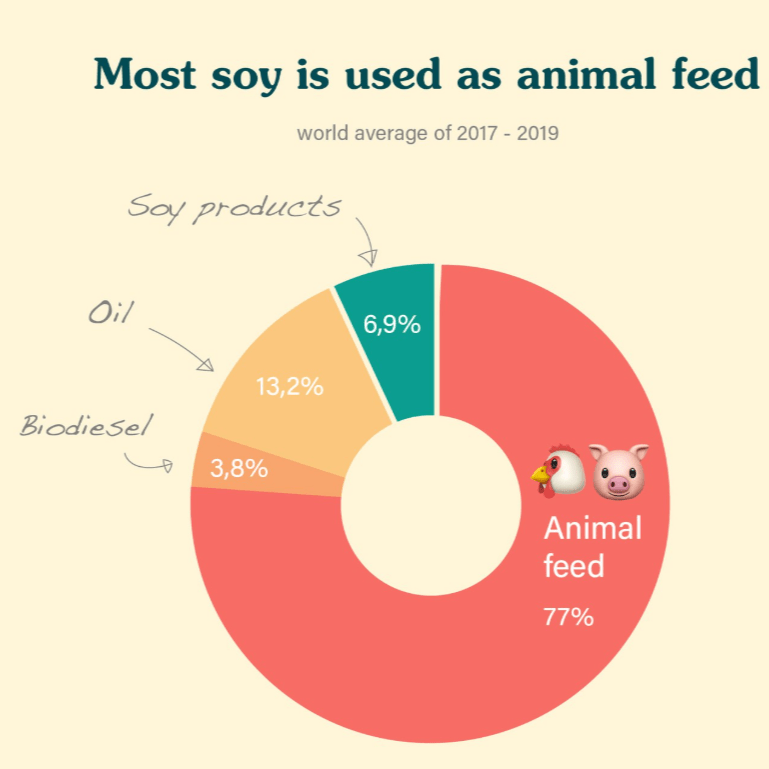
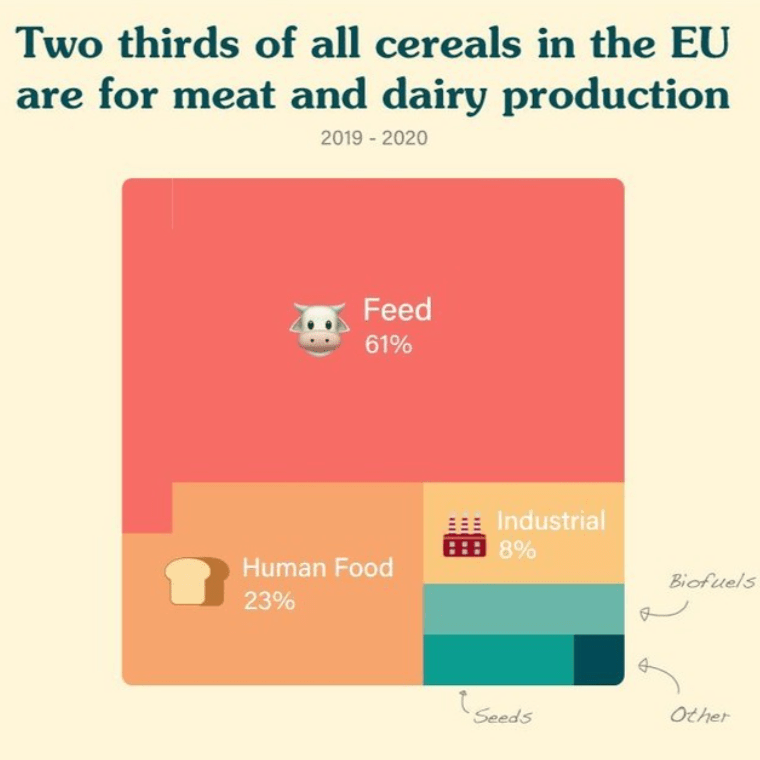
The above infographics are from Fork Ranger.
Most of the catering size food came from Vegetarian Express, which was the only thing that didn’t go according to plan. We waited till the last minute so our fridge wasn’t stuffed with wedding food for too long to order reassured by a guaranteed delivery date from Fedex. In spite of getting a notification from Fedex that our order had been delivered on the designated date it was actually delivered the day after, which was the day of our departure to the woods and delayed us setting off by two hours. The chilled delivery had clearly been sitting in the van in a heatwave overnight too, the gel freezer packs had defrosted and one had burst covering the food packets and our hall carpets with slime. At least another advantage of vegan food is that it stays good much longer than animal products! I do recommend Vegetarian Express for the food itself, but would take delivery estimates with a pinch of salt.
We planned to get sweets and campfire marshmallows came from The Vegan Candyman, but they were out of stock and the only other vegan marshmallows we could find were these, unfortunately on Amazon. Obviously this isn’t ideal, but it’s about progress not perfection. The issue became moot anyway when a crow stole two of the three bags we left out overnight! I still don’t understand how that many marshmallows fit into one crow in apparent violation of all laws of conservation of matter.
Acquiring things
The total weight of made materials – concrete, metal and plastic- is now greater than the combined weight of every living organism on Earth and the rate at which we’re extracting, processing and discarding material is increasing all the time.
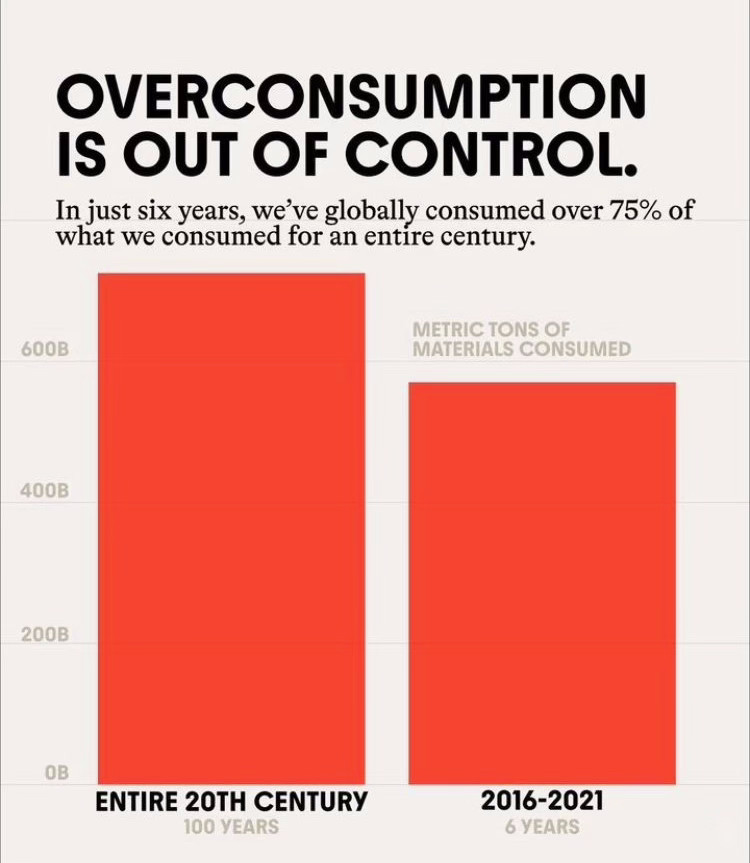
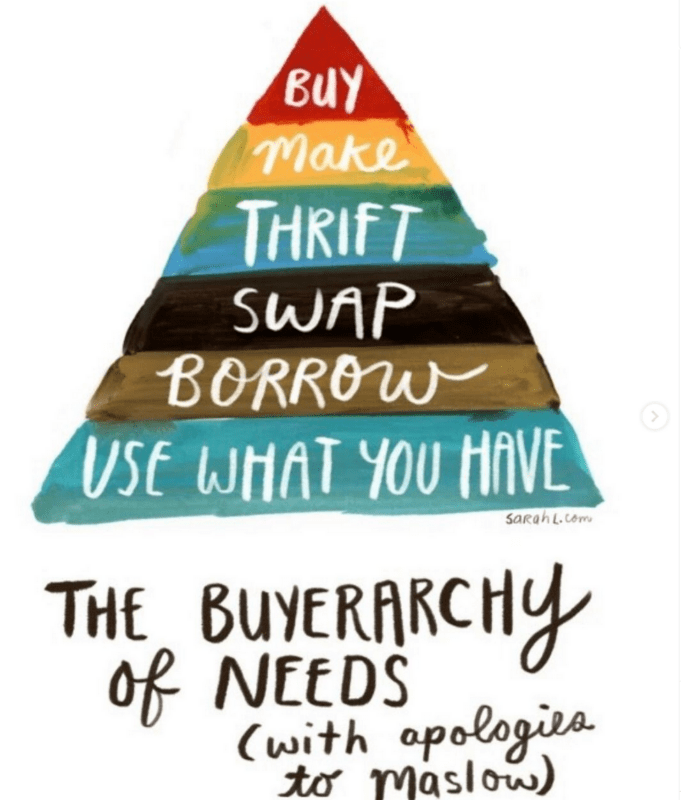
We live in a growth focussed economy trying to get us to buy and then dispose of ever more material goods, on a finite planet with a limited raw materials and a limited capacity absorb the pollution our waste generates. Instead of always buying more new stuff, as the advertising industry is focussed on telling us we must, this should be a last resort and we need to put more energy in using what we already have for longer and sharing it more equitably. This excellent post be Susan Kaye Quinn explains the concept of the Buyerarchy of Needs, the order in which to consider options when thinking of acquiring new things.
Using what we already had
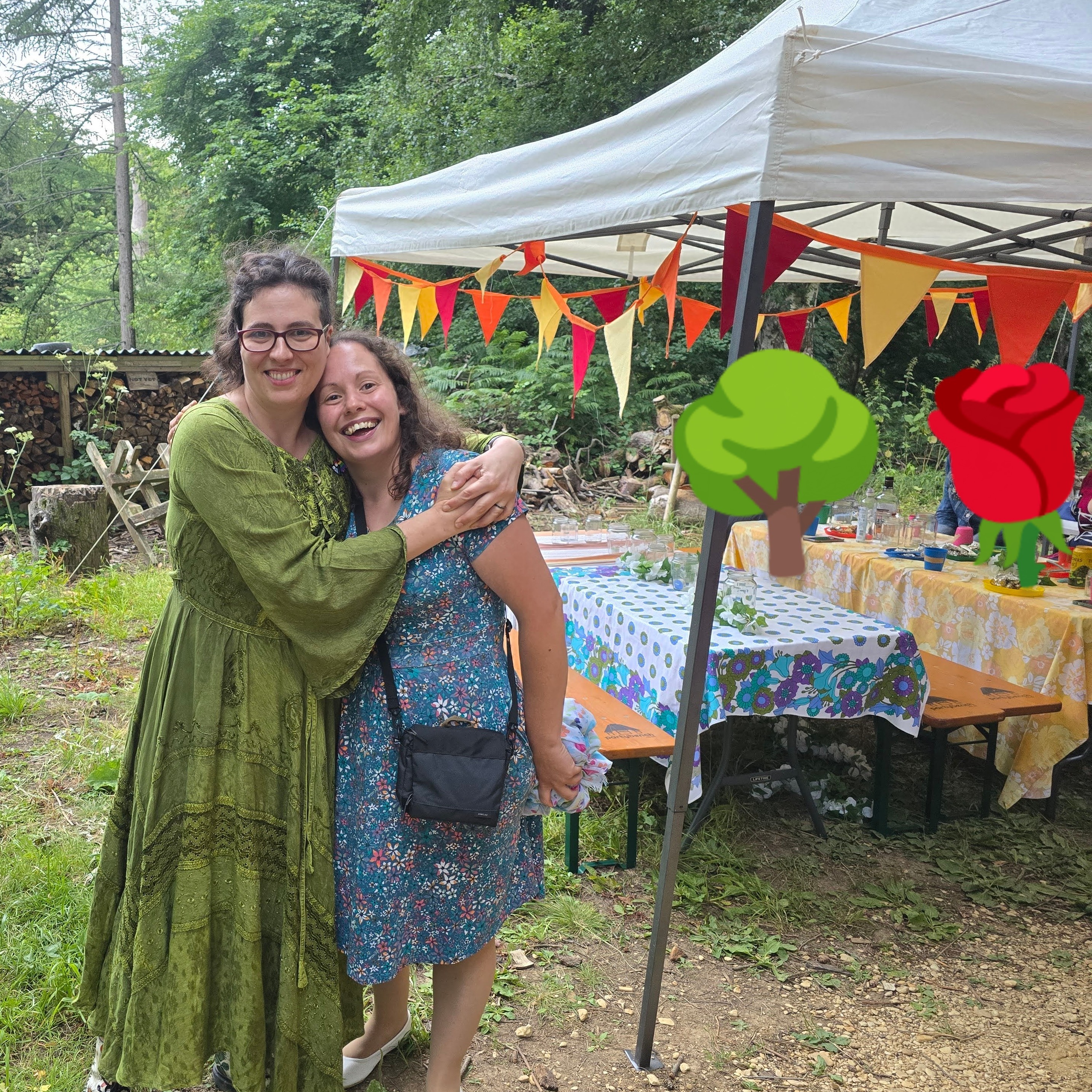
We covered the tables with various vintage tablecloths and throws that we or Jules’s parents already owned, and the bunting (which was hand sewn by Jules’s Mum!) was reused from her brother’s wedding.
Borrowing
Our friend Diana lent us the cake mixer we used to make the wedding cake. We borrowed the jars of string lights from Jules’s brother and the drinks dispenser from our friends Abi and Art.
Hiring
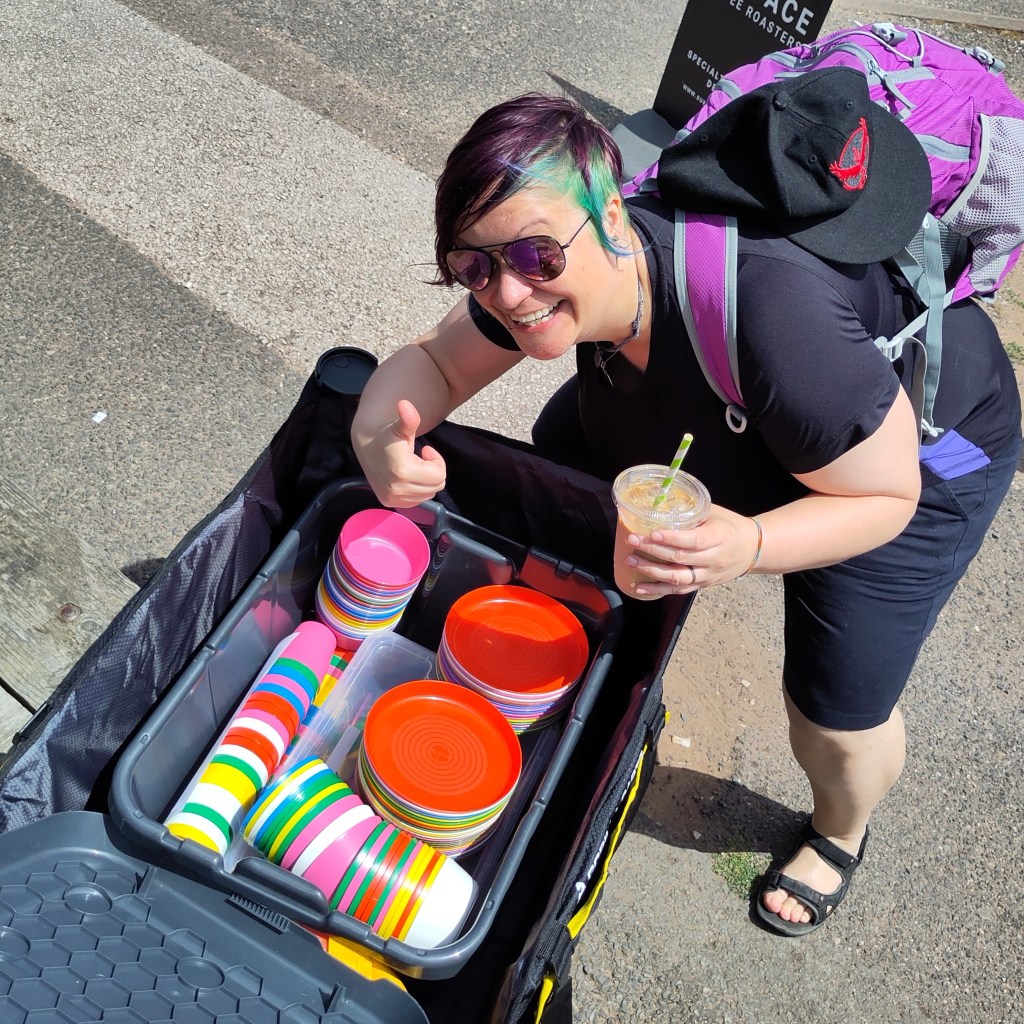
We wanted to use reusable tableware instead of disposables, as even compostable tableware has a material and energy footprint and even tableware that looks like paper often has a thin plastic coating on to make it waterproof, rendering it unrecyclable. At first it looked as though the cheapest glass hire we could find was £50, not including delivery, but then I remembered about the PartyKit Network which hires out reusable plastic tableware. Although it was founded to cater to children’s parties many local groups will hire out for adult gatherings too. After checking around I found a large enough kit for hire for £30 from Roots Community Enhancement in Dawlish, which not only meant our money went to sup[port an organisation doing important work locally but also meant we got a lovely beach day collecting it!
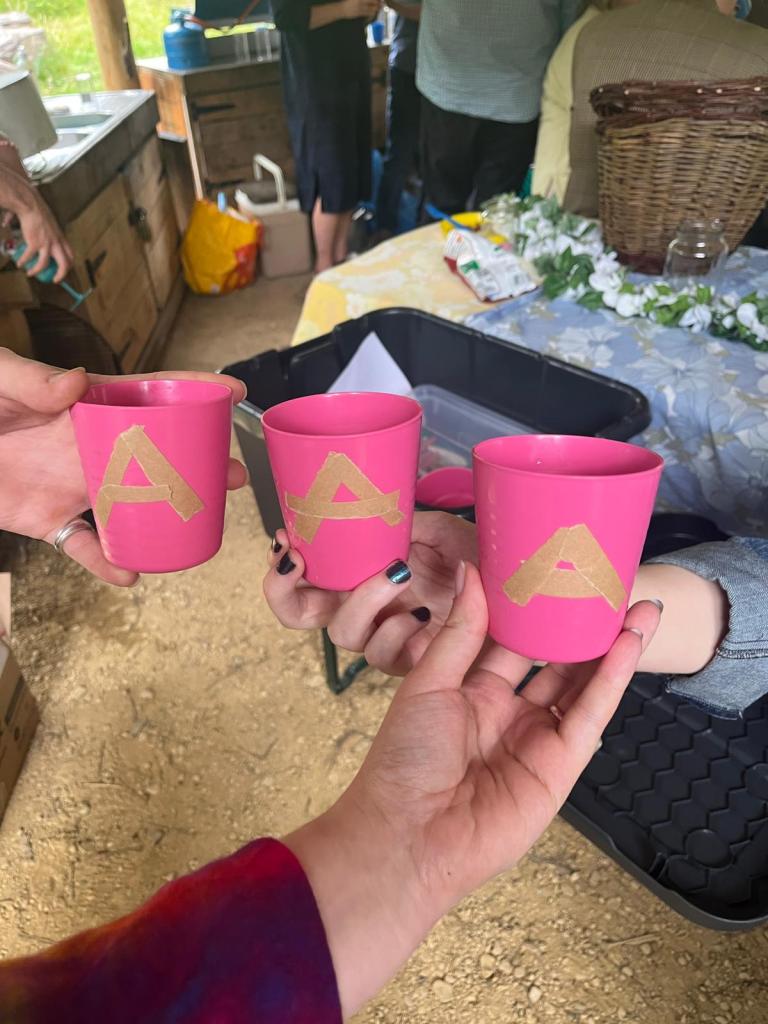
We encouraged people to label their cups with their names or initials using paper tape. This wasn’t quite as successful as expected.
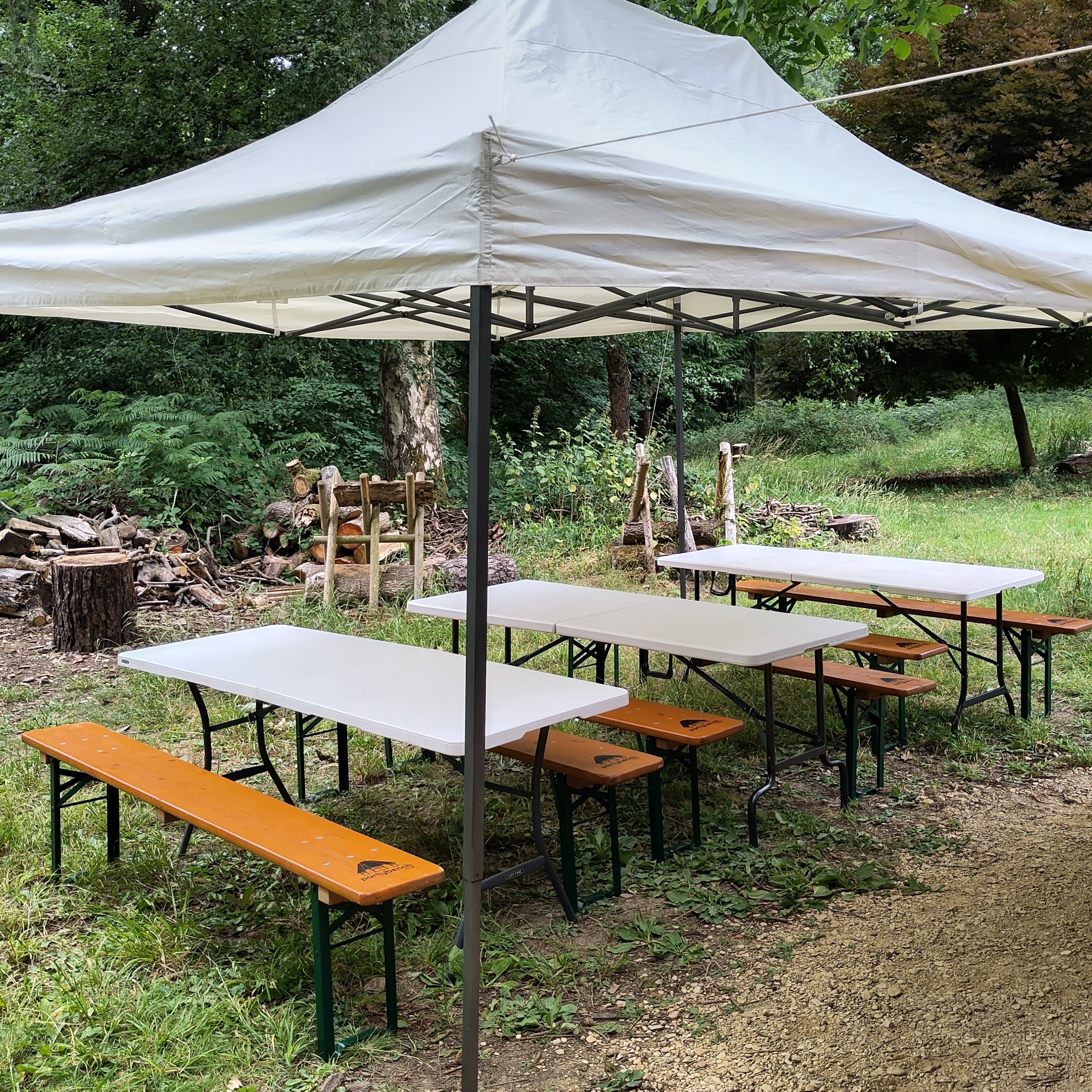
We hired the benches from Party Bench and the tables, gazebo and camping gas stove from Exeter Library of Things. Libraries of Things are a great way of sharing access to objects you use infrequently (did you know the average household drill is apparently used for only 13 minutes in its lifetime?) without having to spend money on buying them and then worrying about how to store and maintain them. There’s a directory of UK Libraries of Things here if you want to find your local one.
Obviously we weren’t able to transport all that by train so we’re incredibly grateful to our amazing friends Art and Abi who drove, loaded and unloaded the van, acted as wedding roadies and were just all round incredible.
Buying second hand
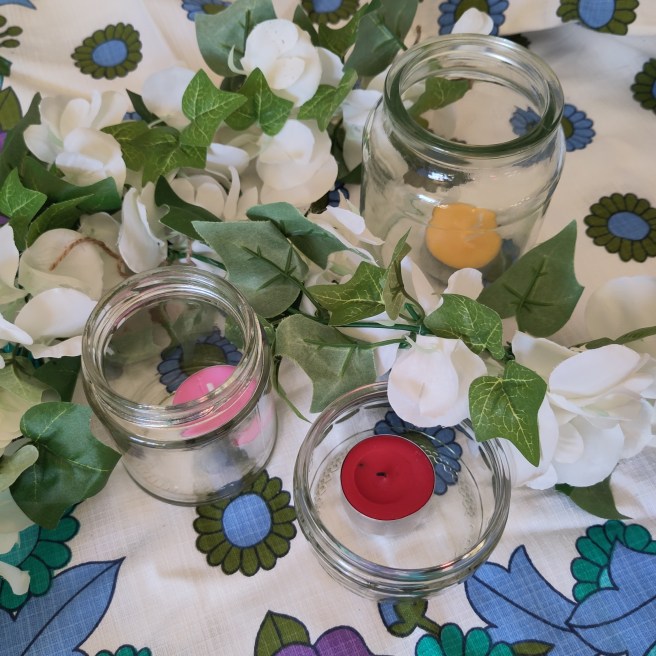
All of the specialist wedding decorations – the table runners, artificial plants and snack cage – were bought secondhand from Facebook Marketplace and will be resold there shortly. While it may seem unsustainable to have plastic flowers, we couldn’t bring living plant material into the ecologically sensitive arboretum for fear of introducing diseases. Several of our friends brought the glass jars we put the tealights in.
Completely by chance we also managed to pick up one of the giant campfire saucepans we used for dinner for £2 while nosing around charity shops. I also bought the cake decorating turntable secondhand, missing one of its stabilising feet which I replaced with Sugru. Contrary to appearances this blog is not actually sponsored by Sugru, but it probably should be.
We weren’t the only ones who shopped second hand for the occasion. Our friends bought a tent on Facebook Marketplace and put it up for the first time for the weekend, when it quickly became apparent that it was easily three times the size they had expected it to be. The enterprise was accompanied by repeated horrified shrieks of “It’s so big!” punctuated by “That’s what she said!” from. Charlie.
Making
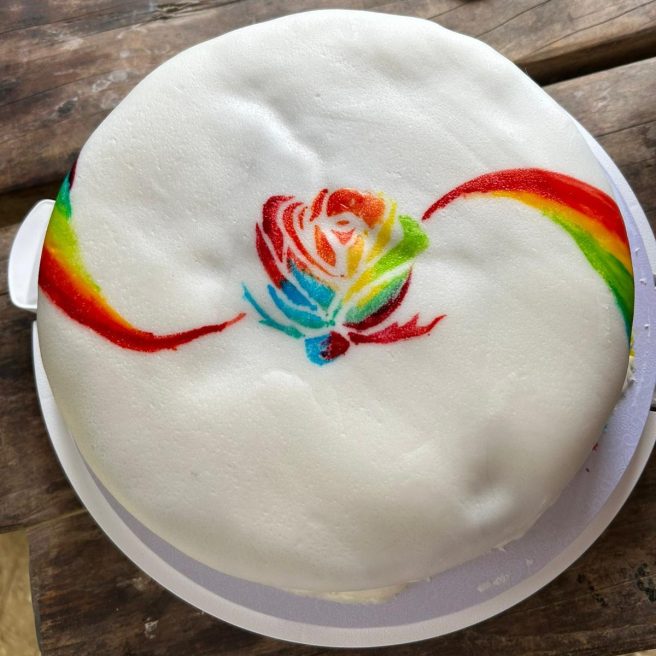
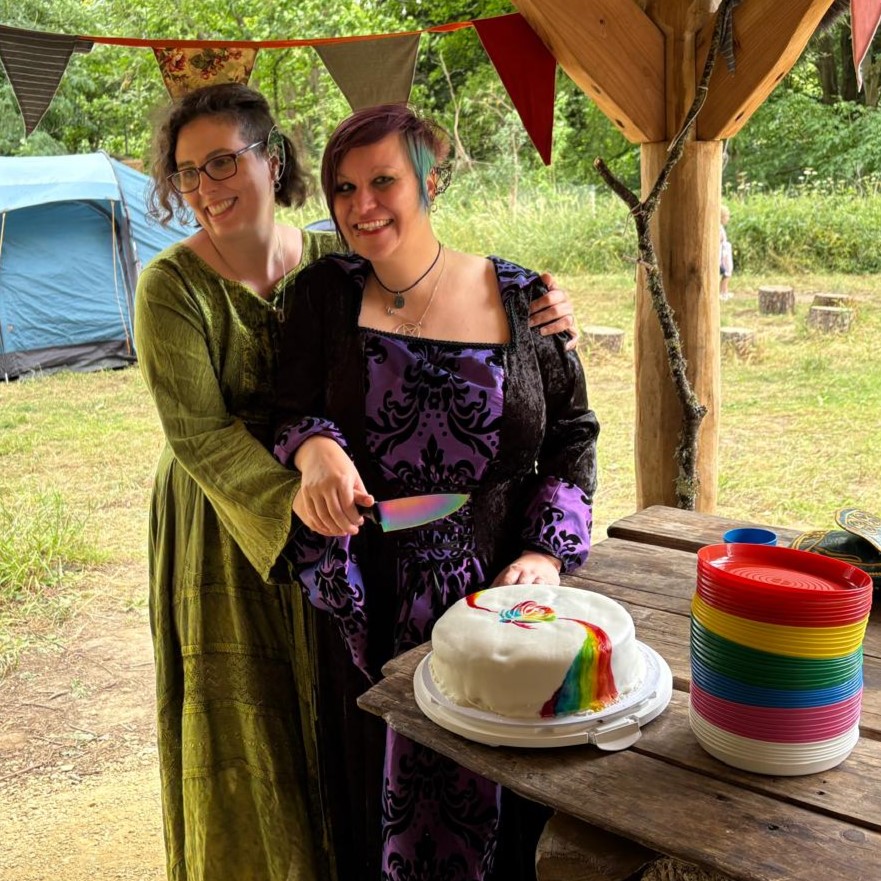
Jules baked and iced the cake (with quite a lot of handholding from her friend Katie, who is a bit of a fondant ninja).
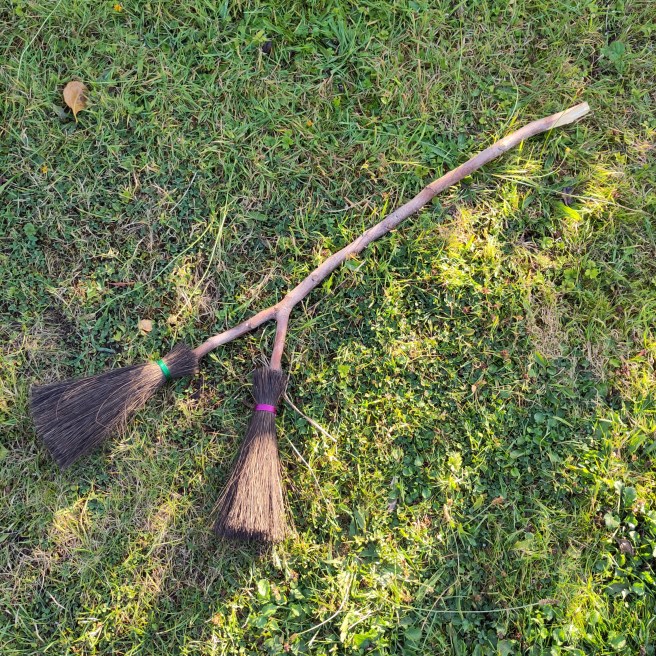
I also made the wedding besom broom we jumped over, using arenga fibre from Frogley Fibre and a forked stick from the university campus where we both work and where we met.
Supporting artists we know
We have some incredibly talented friends who we were delighted to be able to showcase at our wedding!
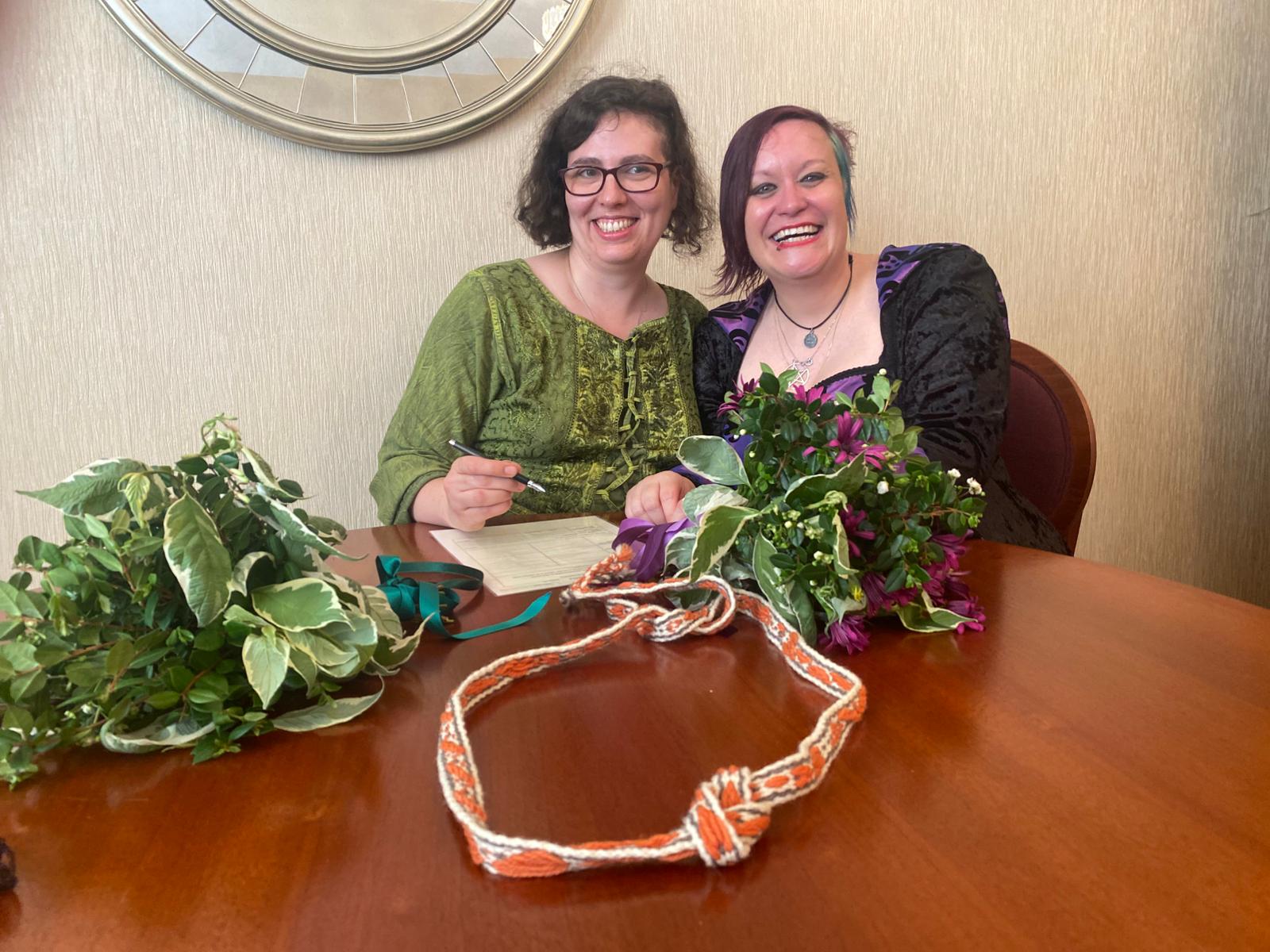
The handfasting cord which joined us was tablet woven and madder dyed by our friend Bec Briar, a spinner, weaver and shepherd, with wool from her high welfare flock based on her sustainable smallholding in Somerset.
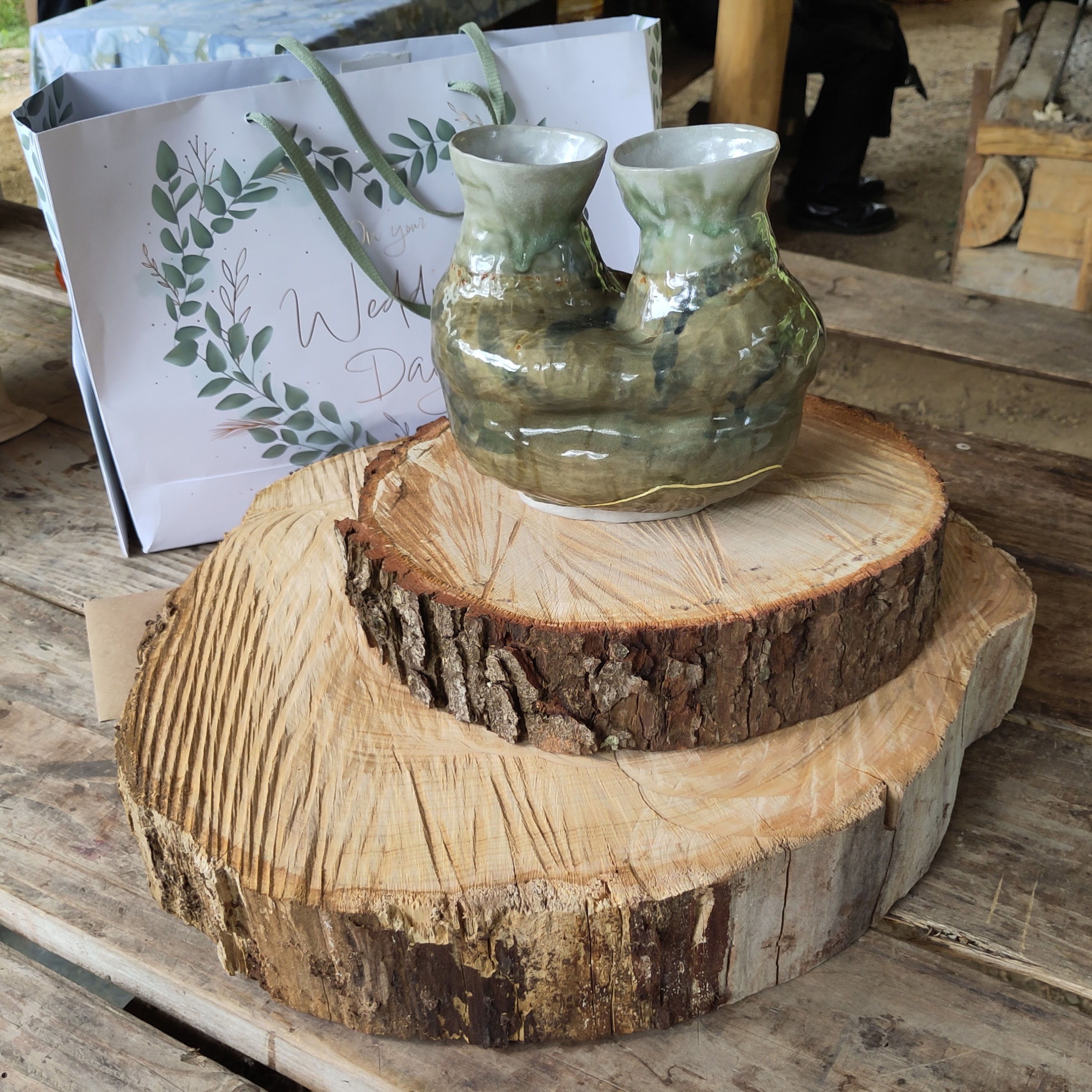
Many years ago I attended a Lithuanian Romuva wedding ceremony at which the newlywed couple drank from a special connected cup – a difficult feat symbolising the challenges they would face in their lives together but also a lot of fun! We commissioned our friend, the studio ceramicist and artist Imogen Dent to make a similar shared vessel for the ceremony. Her style, taking inspiration from natural organic forms, perfectly fit the reverence for nature that we share as a couple and wanted to bring into our wedding.
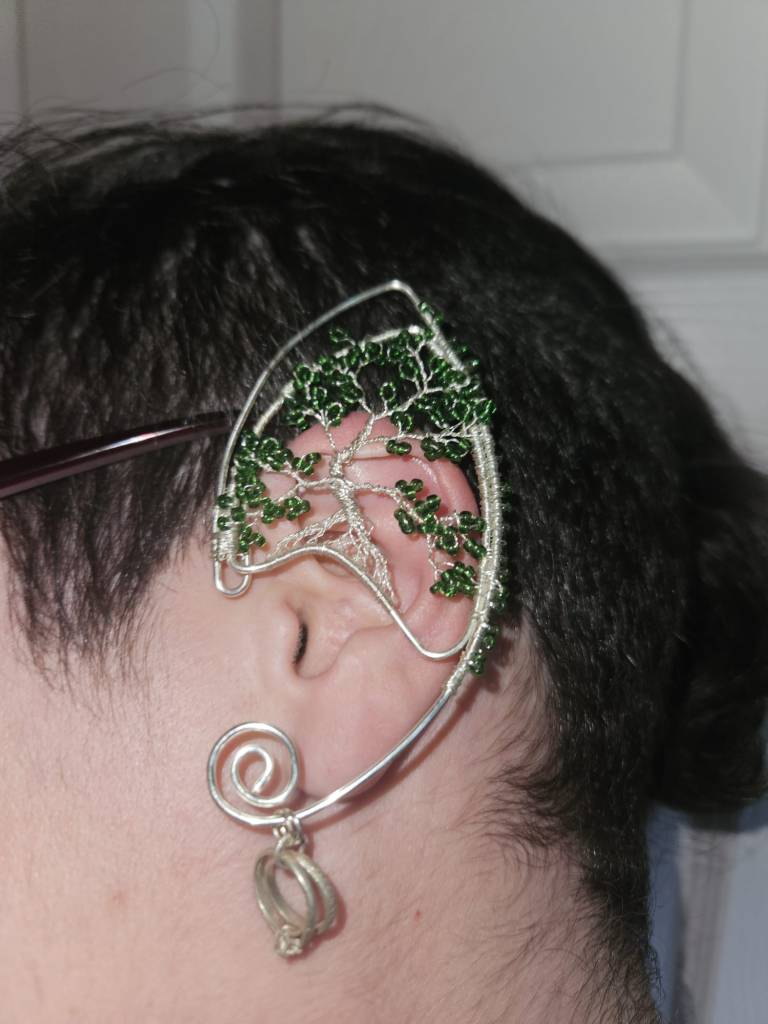
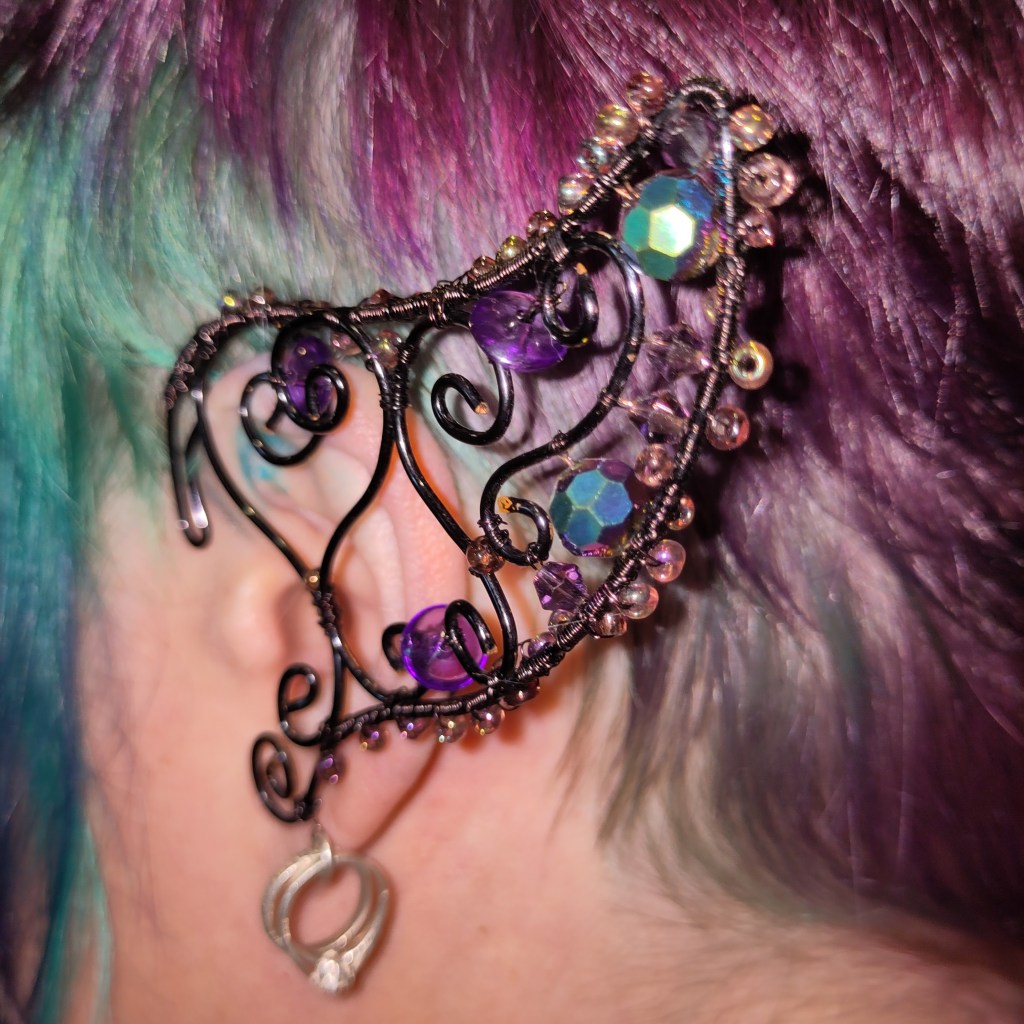
Our beautiful elf ears inspired by Tortworth trees were made for us by our friend Abi.
Buying handmade
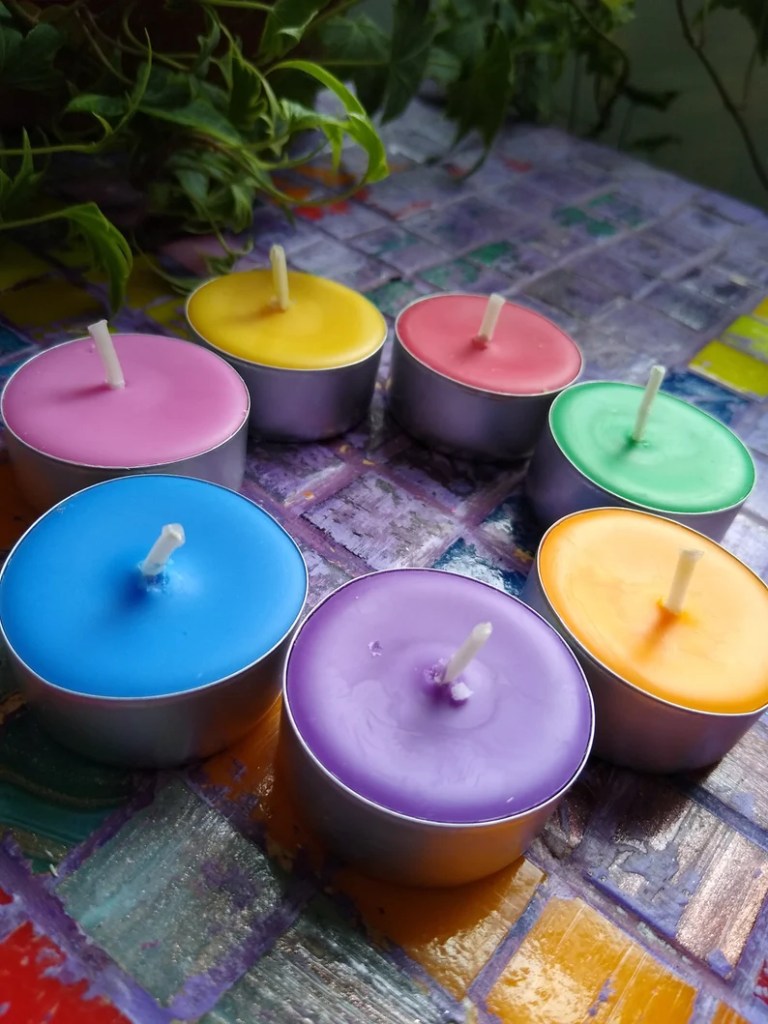
We got our tealights in Pride colours, and made with soy wax not petroleum products, from Clumsy Clarissa Crafts on Etsy.
Charlie’s beautiful dress was made to measure for her by Dawn’s Medieval Dresses.
Waste
Even though I’m not very pleased with Olio right now I listed some of the the glass jars for tealights and the gift bags the presents came in on there after the wedding, as well as some of the cake decorating equipment because honestly I never want to do that part again! Some of the other jars were used for making jam with plums from my parents’ tree, and a few of the larger ones went to a friend to brine grapevine leaves for dolmades in.
Tortworth requires you to pack all your rubbish out with you, so we separated ours into food waste, recycling and everything else. The food waste was stored in sealed tubs to keep animals off and then taken home to go in our hotbin composter. (I’ve been swiping plastic sweet tubs whenever someone brings them in to work for a while now, not only do they make cake tins but they’re perfect for this sort of thing and go through the dishwasher with no problems.) We did have rather more food waste than I would have liked – we overcatered slightly, not helped by my decision to impulse buy an entire giant watermelon because really what excuse was I ever going to have to do that again? But at least our wedding didn’t involve flying 95 private jets into a city sinking as under climate change induced sea level rise, so I think we’re doing okay.
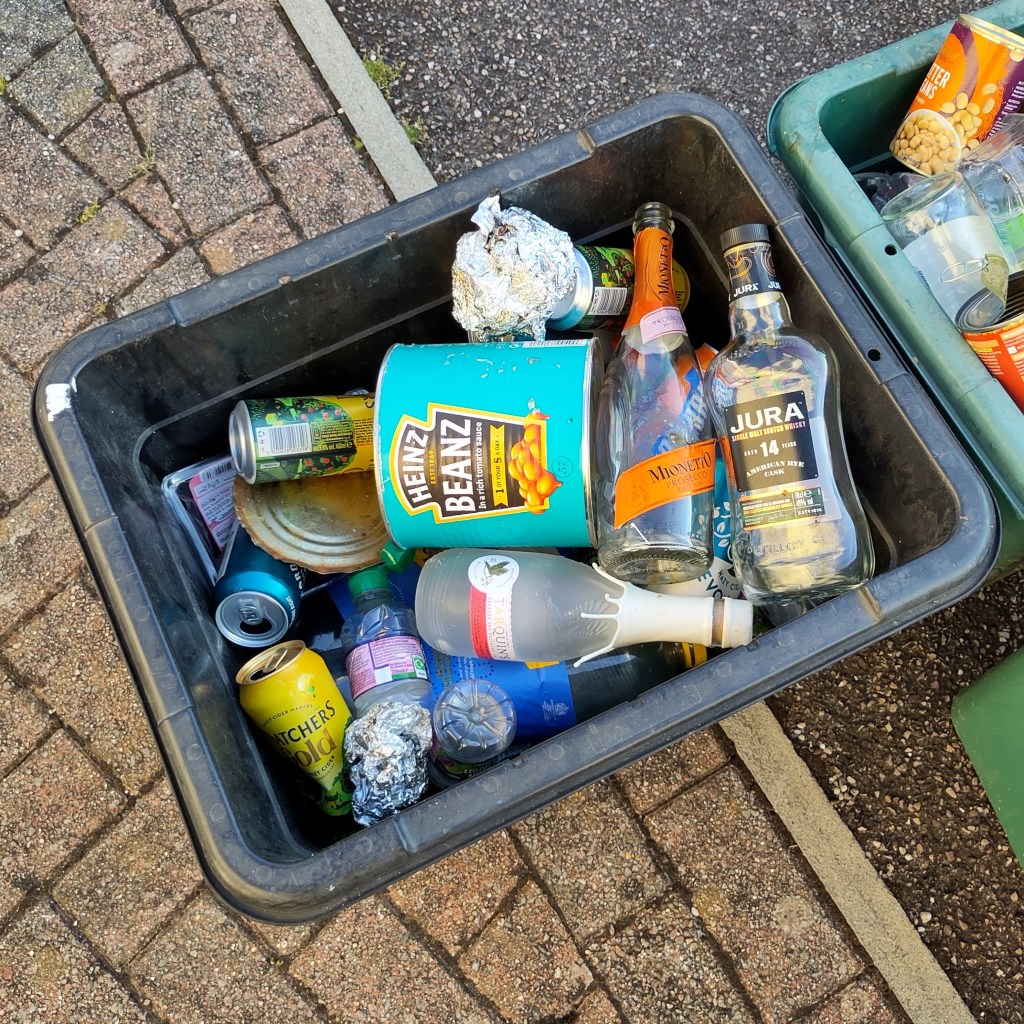
You know it was a good party when your recycling bin looks like this afterwards.
Did you find this post useful?
If you can afford it and would like to say thank you, why not donate to our wedding fundraiser for The Trussell Trust?

 Tangled Bank Foraging and Fibre Crafts