

Greta Thunberg is currently crossing the Atlantic in the sailing yacht Malizia II in order to attend the UN Climate Action Summit in New York, which in addition to being an exciting adventure for her of which I am extremely envious is a CO2 neutral alternative to a flight that would have released two tonnes of the greenhouse gas into the atmosphere. You can track her progress across the Atlantic in real time on this map (the base layer of which, incidentally, is also extremely cool – it’s Windy, a free, open source visualiser for weather and pollution data, built not for profit but because the people who created it thought that was important to have).
Awareness is growing of the enormous climate impact of aviation, which is responsible for around 2.5% of humanity’s greenhouse gas emissions annually, and for many people in the UK flying is probably the discretionary aspect of their environmental impact that they can most easily change. It’s hard to switch to a less polluting form of transport if you live in a town designed for cars for example, or to insulate a rented home, but most people have control of the mode of transport they choose to reach their holiday destination. Organisations like Flight Free 2020, which aims to have 100,000 people pledging not to fly next year, are capitalising on this increasing awareness, and with evidence showing that hearing about the environmental choices others are making encourages people to emulate those choices, stories of high profile, low carbon journeys like this one are really important to share.
I was therefore slightly surprised to see that the aspect of the journey that seems to be generating the most comment is not the carbon emissions averted, but the toilet bucket shown in the video. (And not because of the grocer’s apostrophe, which made me wince, then feel like a snob for wincing, then wince at that).
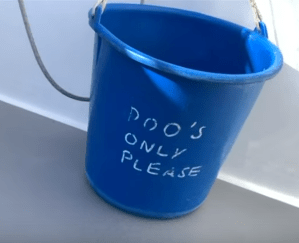
A racing yacht built for the Vendée Globe 2016 – 2017, Malizia II is built for speed not comfort and all extraneous weight has been stripped away in pursuit of this goal. Conditions aboard the Malizia II are far from luxurious (on her Instagram Greta Thunberg described the experience as being “like camping on a rollercoaster”). I was however quite surprised at how much speculation there seems to be about whether a 16 year old cis girl would be able to manage the toilet arrangements on board on board.
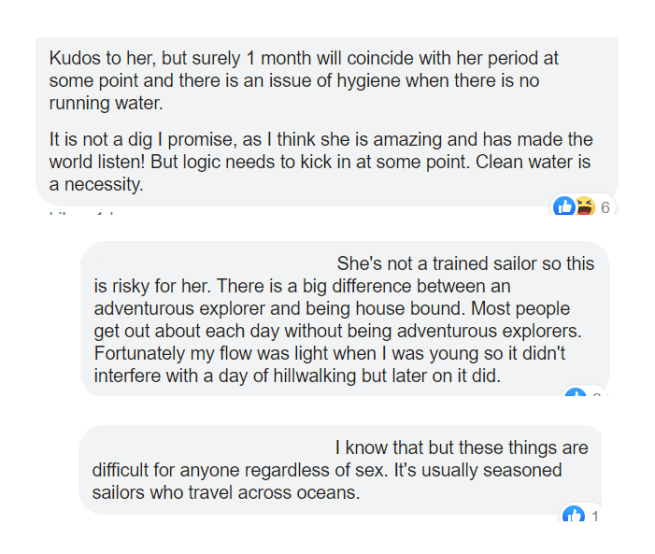
I have no idea how Ms Thunberg will be managing her period or her privacy on this journey, and quite frankly it’s none of my business or anyone else’s. She is an incredible young woman who knows her own body and what she’s capable of, and is I’m sure capable of tolerating some temporary discomfort in order to live in accordance with her values and have an amazing journey the like of which few people get to experience.
While some people who menstruate suffer pain and other extremely difficult symptoms during their periods (and if people with penises experienced the same symptoms on a regular basis I have no doubt that medical research on how to alleviate them would have been thoroughly funded a long time ago), I would have hoped that in 2019 we had moved beyond the idea that menstruation in itself limits people’s ability to live adventurously. People who menstruate can climb mountains and explore difficult terrain. There is no statistical evidence to back up the idea that menstruation attracts bears while hiking. You can safely do yoga on your period. While some astronauts who menstruate choose to suppress their periods hormonally while in space, others do not. And menstruation is no barrier to carrying out scientific fieldwork in challenging conditions, as the following video explains.
However, just as with the carbon emission of flying, it’s always useful when a public figure opens up a conversation and in this case Great Thunberg seems to have entirely accidentally started one about menstruation. Even now a biological phenomenon experienced by around half the world’s population is considered something of a taboo subject, a shameful secret to be hidden. I know women in their thirties, from highly educated British families, who were told to bring their sanitary products home from their friends’ houses as teenagers instead of disposing of them in their bins. Because of this stigma so many menstrual products are designed with an emphasis on concealment and discretion rather than comfort or sustainability in mind. It’s only because of courageous campaigning by determined activists, the majority of them women, that we’ve started to talk publicly about how we manage our periods in more difficult situations, and started to consider whether the existing products are suitable or whether better alternatives exist.

City to Sea estimates that every day 2.5 million tampons and 2 million pads and panty liners are flushed down the the toilet in the UK, washing into our waterways and oceans. This is not only a huge amount of non-degradeable plastic being released into the environment, the manufacture of these single use items has a huge environmental cost in terms of energy and resources. It’s important to keep in mind that more sustainable, reusable menstrual products are not accessible to everyone, whether due to price or ease of use, and the assumption that if you personally can make a change everyone should be able to is a problem that continues to plague the sustainable living movement. For those who are able to and interested in managing their periods in more sustainable ways however, there are now vastly more alternatives to the basic plastic-backed pad or applicator tampons that were available when I was starting my period.
There are a number of brands of period pants out there, but Wuka (short for Wake Up and Kick Ass) gains points in my estimation for ensuring good working conditions in the factories that manufacture its underwear and for being transparent about the fact that while the micromodal fabric that makes up the side panels is biodegradeable and CO2 neutral the absorbent layer in the crotch is not. The brand was created by a Ruby Raut, an environmental scientist who was inspired to create better menstrual products by the stigma around and lack of resources to manage menstruation that she experienced growing up in Nepal. (Update: if you buy any through this referral link, we both get a £5 discount on future purchases).
Reusable pads are available from a number of sellers on Etsy, which is a great way to support small independent businesses, or alternatively there are instructions here to make your own. I was sceptical that these would stay in place, but have found that they work pretty well as backup protection. The only issue I have with them is that if they slip while cycling the popper can end up in a rather painful place, it doesn’t happen often but can be rather distracting when going round a tricky junction, say.
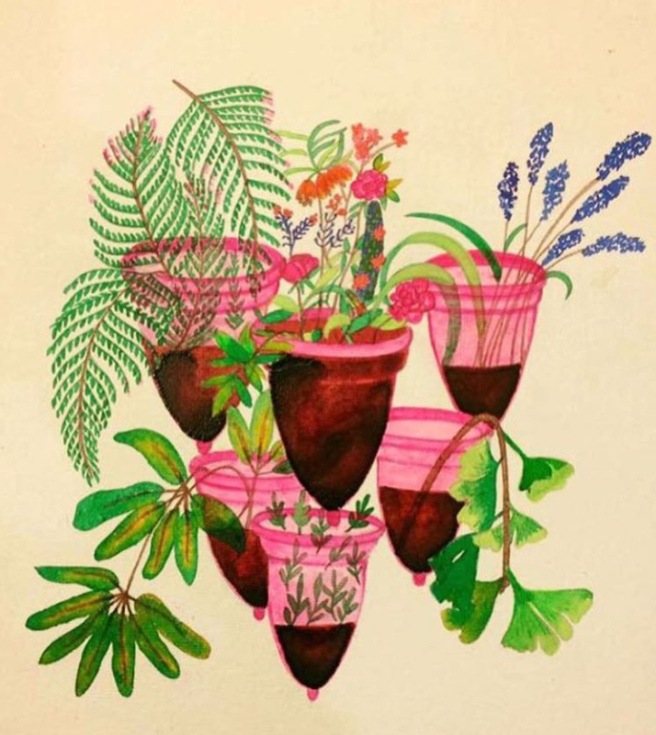
The Mooncup was the original menstrual cup, a reusable silicone cup that sits in the vagina like a tampon does but holds blood instead of absorbing in and can be emptied out and sterilised indefinitely instead of being disposed of. There are now a number of different menstrual cup brands offering different shapes, sizes and stem types, to work with a greater variety of bodies.
And for those who prefer to stick with tampons, Natracare are at least fully biodegradeable and an all cis female engineering team at Dame have created the first reusable tampon applicator that works with any size of tampon, avoiding the need to use and discard a disposable applicator with every change.
(One reuseable menstrual product that I would NOT recommend is sea sponges which have been found by the FDA and independent laboratory testing to contain sand and grit, which be shed and can mechanically irritate the vagina, as well as harbouring assorted unpleasant bacteria and other microorganisms).
For those with regular cycles, cycle tracking apps can also be a very useful tool for managing menstruation in situations without comfortable bathrooms and running water, letting you know when and how much flow to expect and helping you plan how to manage it. It’s worth considering how these apps make their money and what happens to the data you supply them with – some are created with extremely nefarious motives indeed – but I’d recommend Clue which is evidence based, informative and doesn’t make assumptions about your gender or why you’re tracking your cycle.
If I’d like you to take one thing away from this post, it’s that conversations are always worth having to share best practice, whether it’s about sustainable travel or sustainable ways to manage periods. And a second thing of course, which is don’t patronise Greta Thunberg. She’s an incredibly tough, determined young woman. If she can tackle climate breakdown head on she can tackle the Atlantic.

 Tangled Bank Foraging and Fibre Crafts
2 thoughts on “How Greta Thunberg’s Atlantic crossing is accidentally tackling period stigma”