

We are becoming increasingly aware of the problems caused by plastic waste, particularly single use packaging, and of the inadequacies of our methods of dealing with it as it becomes clear that recycling is not the panacea it was sold as. It’s therefore encouraging to see a new scheme being launched to tackle the problem at source, rather than just attempting to clear up afterwards.

Loop is a system of returnable, refillable packaging that is being launched this spring in the US and France, and potentially by Tescos in the UK in autumn. You can sign up via the form at the very bottom of this page to join the waiting list for the trial, which is probably worth doing even if you don’t live in France or the US (I have) because I’m guessing they’re also using it to gauge where there’s demand.
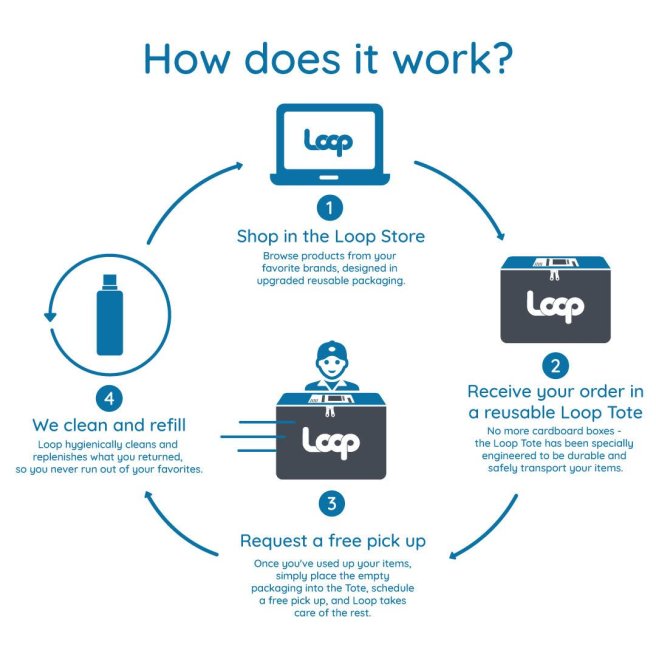
I’d imagine the success of this initiative will hinge on the range and availability of products, and its environmental impact reduction will in the end depend on how many times the packaging is reused and so how many single use products it displaces. Unfortunately it does already look like several brands have gone for their own packaging designs which, while striking looking, will likely mean that the packaging is not interchangeable: Häagen-Dazs, Quaker Oats and Huile Lesieur seem to have gone for rather a unique, space-age design.


Whereas Carrefour and Greenhouse Juice have gone for a more standard design of bottles and jars.


I do hope Loop ends up going with a more standardised container design rather than customised ones for every brand, as I could see that this could present something of a barrier to entry for smaller brands that may lack the facilities to manufacture their own. This wouldn’t present a problem for founder companies like Procter & Gamble, Nestle, PepsiCo and Unilever, but could easily for smaller local brands which could potentially lead to even greater centralisation of our food system if this initiative takes off. I would also ultimately like to see products in these containers available in supermarkets, along with physical collection points for reuse, as the delivery companies that the scheme will rely on in its trial stages have a very poor record of ethical treatment of their drivers. Nevertheless I recognise that this idea is in its very early stages, and the best way to support its evolution into something even better is to sign up to demonstrate demand.
I want to believe that in ten or twenty years time we’ll look back at the fact that we manufactured complex, energy and resource intensive materials and then throw them away just to transport something in them once as utterly ridiculous.

 Tangled Bank Foraging and Fibre Crafts
It looks like a really good program – I hadn’t heard about it before!
LikeLike